
First Ætt — Foundations of embodied life
ᚠ FEHU — Abundance
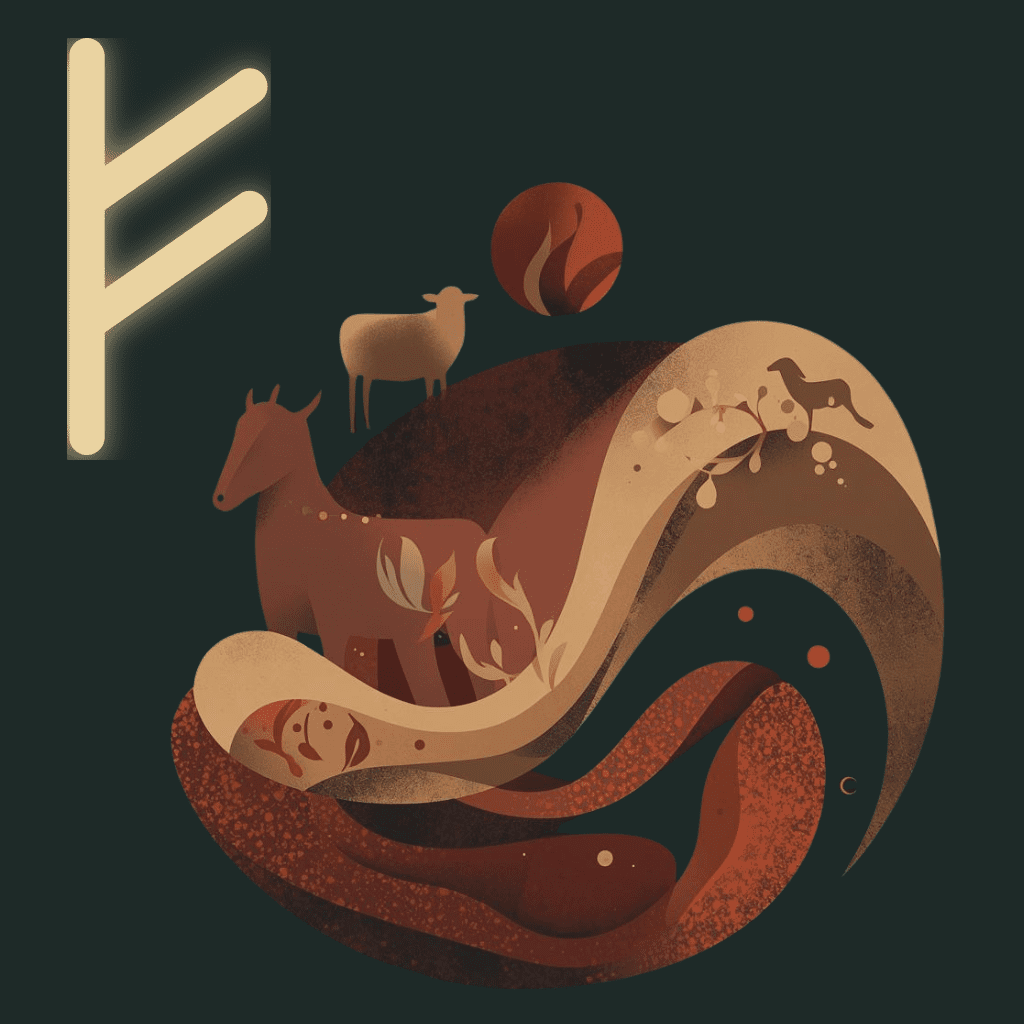
Fehu belongs to the First Ætt and stands first in the runic system, expressing abundance, flow, and movable wealth.
Essence
Fehu is the rune of living abundance. It represents resources that are alive, moving, and responsive to care. Unlike static wealth, Fehu speaks of nourishment, circulation, and responsibility. What belongs to Fehu must be tended — otherwise it withers or slips away.
At its core, Fehu teaches that abundance is a relationship, not a possession.
Element & Energy
Element: Fire (gold-fire), Earth
Energy: Feminine
Fehu carries a nourishing yet active quality. Earth gives form and stability, while fire keeps resources in motion. This is abundance that grows through attention, not control.
Somatic / Energetic Layer
Fehu is felt through:
physical vitality and nourishment
the body’s sense of safety and being provided for
grounded pleasure and embodied presence
When Fehu flows freely, the body feels supported and resourced. When blocked, it may manifest as chronic dissatisfaction, fatigue, or a persistent fear of lack — even in times of material stability.
Nature & Mythology
Colors: warm red, gold, earthy tones
Natural symbols: livestock, horns, jewelry, movable wealth
Mythic associations: Freya and Freyr
Worldly layer: Svartalfheim and Muspelheim
Fehu belongs to the world of everyday life — where survival, nourishment, beauty, and responsibility meet. Through Freya and Freyr, it carries themes of fertility, embodied pleasure, prosperity, and the sacredness of material well-being.
Shadow / Caution
In its shadow aspect, Fehu can express:
attachment to possessions or security
fear of loss and scarcity thinking
accumulation without care or circulation
When abundance is hoarded or controlled instead of tended, Fehu stagnates. Its shadow asks for honesty:
Are you nurturing what you have — or clinging to it out of fear?
>>Continue to Uruz — where abundance demands strength
ᚢ URUZ — Strength
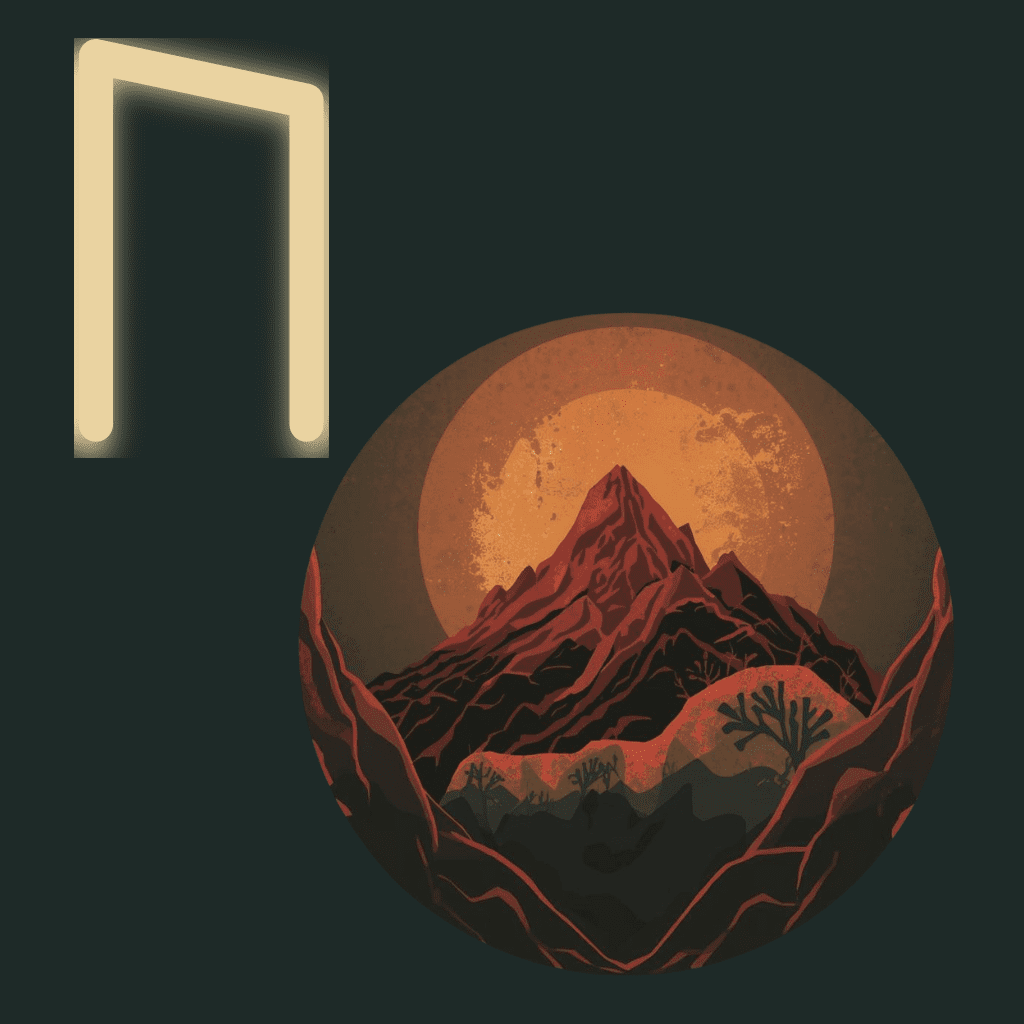
Uruz belongs to the First Ætt and stands second in the runic system, expressing strength, vitality, and regenerative life force.
Essence
Uruz is the rune of raw life force and embodied strength. It represents vitality that rises from deep within — not imposed power, but strength that grows through presence, endurance, and inner alignment. Uruz carries the impulse to heal, to regenerate, and to meet life with courage.
At its core, Uruz teaches strength as capacity, not domination.
Element & Energy
Element: Earth (with traces of Water)
Energy: Masculine and Feminine
Uruz holds a primal balance between grounded stability and fluid vitality. It unites masculine drive with feminine regenerative power, creating strength that is resilient rather than aggressive.
Somatic / Energetic Layer
Uruz is experienced through:
physical vitality and stamina
muscular tone and endurance
sexual and creative life force
When Uruz is active, the body feels capable, alive, and responsive. When blocked, it may manifest as exhaustion, weakened immunity, loss of motivation, or a sense of inner collapse.
Lorem ipsum dolor sit amet, consectetur ad
Nature & Mythology
Colors: deep red, earthy brown-red, green
Natural correspondences: wild cattle, strength-bearing animals, fertile land
Trees: birch, oak
Mythic associations: Thor, Urd
Worldly layers: Vanaheim and Asgard
Uruz belongs to the realm of primal life energy — the force that sustains both human effort and divine action. Through Thor, it expresses raw strength and protection; through Urd, it connects vitality with fate and deep time.
ipiscing elit. Ut elit tellus, luctus nec ullamcorper mattis, pulvinar dapibus leo.
Shadow / Caution
In its shadow, Uruz may appear as:
burnout or depletion
force without direction
strength driven by pressure rather than alignment
When vitality is pushed instead of regenerated, Uruz weakens. Its shadow asks a crucial question:
Is your strength being renewed — or merely consumed?
>>Continue to Thurisaz — where raw strength meets resistance
ᚦ THURISAZ — Protection
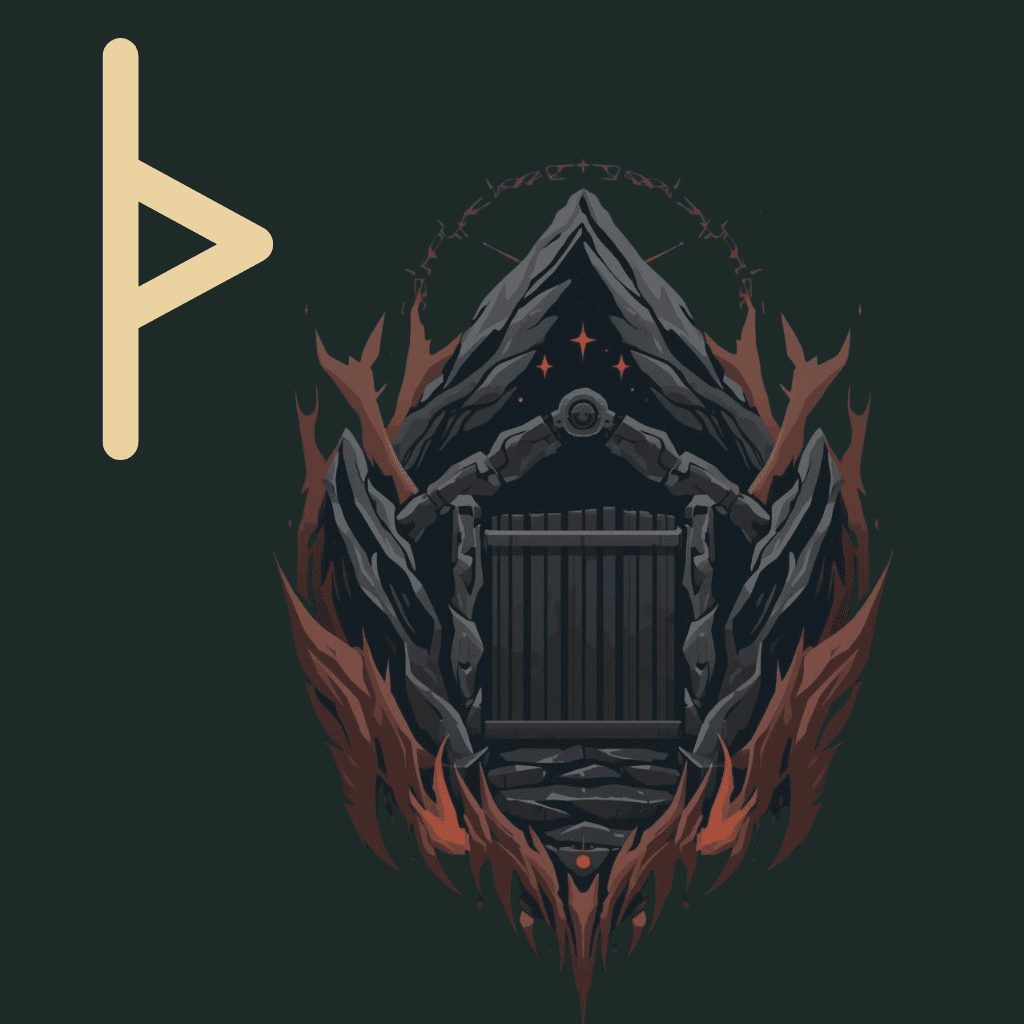
Thurisaz belongs to the First Ætt and arises after strength as the rune of protection, boundaries, and conscious restraint.
Essence
Thurisaz is the rune of active protection and conscious boundaries. It marks the moment where force pauses and awareness steps in. Rather than pushing forward, Thurisaz teaches when to stop, to wait, and to face what stands at the threshold.
At its core, Thurisaz is not aggression, but discernment — knowing when action would cause harm and restraint brings clarity.
Element & Energy
Element: Fire
Energy: Masculine
Thurisaz carries a sharp, focused fire. This is not a warming flame, but a guarding spark — precise, alert, and potentially destructive if misused. Its energy demands presence and responsibility.
Somatic / Energetic Layer
Thurisaz is felt through:
tension and alertness in the body
heightened boundaries and reflexes
the instinct to pause before crossing a line
When balanced, it brings clarity and safety. When overactivated, it may show as chronic defensiveness, rigidity, or inner pressure that blocks natural flow.
Nature & Mythology
Colors: red, dark crimson
Natural correspondences: thorny plants, sharp growth, oak
Mythic associations: Thor, the Jötnar (giants)
Worldly layer: Jötunheim
Thurisaz belongs to the realm of primal forces and raw power. Through Thor, it expresses protective force and decisive action; through the Jötnar, it reminds us of chaos that must be met consciously, not denied.
Shadow / Caution
In its shadow, Thurisaz may appear as:
acting from fear or defensiveness
force used without clarity
resistance to necessary change
When protection becomes reaction, Thurisaz turns inward and hardens. Its caution is clear:
Do not act from fear — wait until the boundary is consciously chosen.
>>Continue to Ansuz — where force gives way to understanding
ᚨ ANSUZ — Wisdom
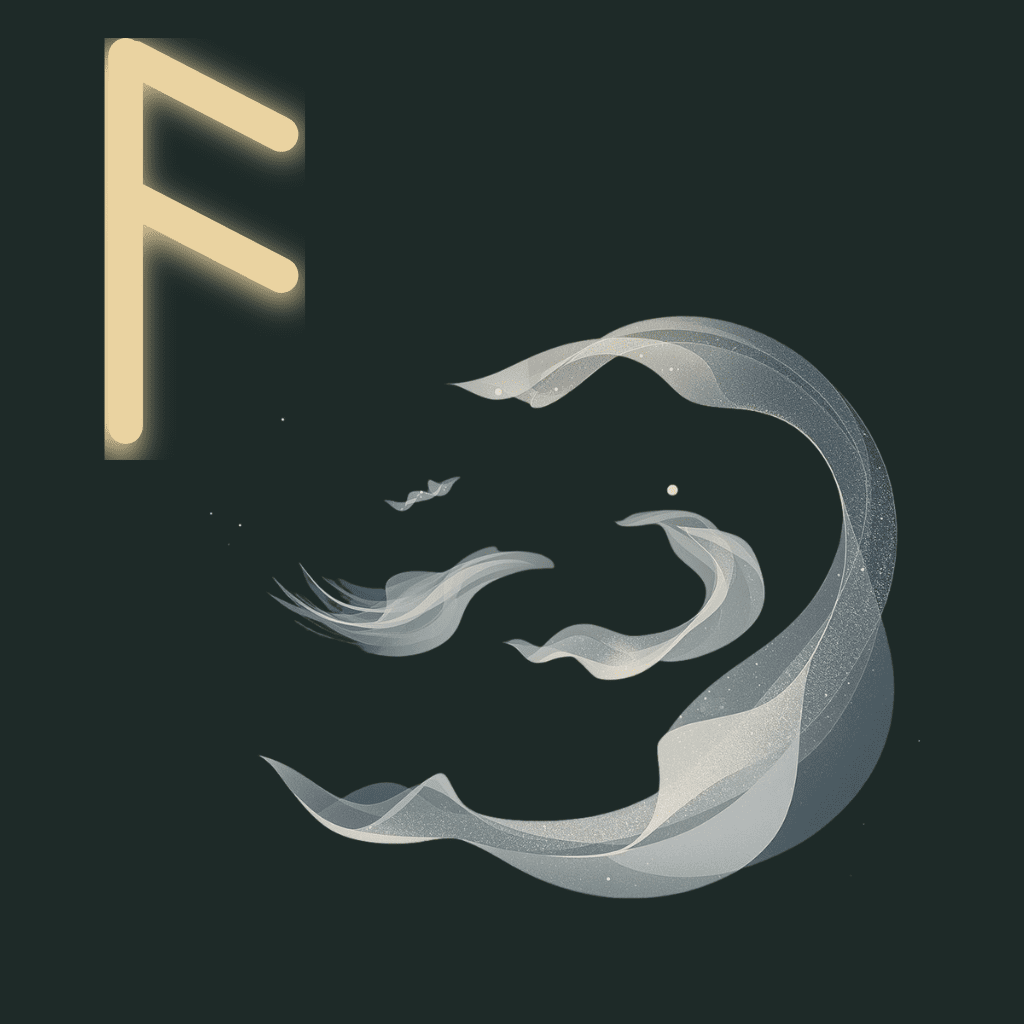
Ansuz belongs to the First Ætt and follows protection as the rune of wisdom, communication, and inspired understanding.
Essence
Ansuz is the rune of living wisdom and conscious communication. It represents the moment when awareness begins to speak — not as noise, but as meaning. Ansuz carries insight that moves through breath, voice, and understanding, connecting inner knowing with outer expression.
At its core, Ansuz teaches that wisdom is not accumulated — it is received and articulated.
Element & Energy
Element: Air
Energy: Masculine
Ansuz moves through the subtle realm of air: thought, speech, and inspiration. Its masculine energy is outward-directed, carrying insight from the inner world into form through words, symbols, and guidance.
Somatic / Energetic Layer
Ansuz is experienced through:
breath and the rhythm of speech
the throat, mouth, and nervous system
moments of sudden clarity or insight
When Ansuz is balanced, communication feels truthful and aligned. When blocked, it may manifest as confusion, miscommunication, empty words, or a disconnect between what is known and what is spoken.
Nature & Mythology
Colors: light blue, grey, soft white
Natural correspondences: wind, breath, birds
Mythic associations: Odin
Worldly layer: Asgard
Ansuz is deeply tied to Odin, the seeker of wisdom who sacrificed certainty for knowledge. Through him, Ansuz reflects inspired speech, divine messages, and the responsibility that comes with insight. Words, in this realm, shape reality.
Shadow / Caution
In its shadow, Ansuz may appear as:
manipulation through words
false authority or empty guidance
speaking without listening
When wisdom is claimed instead of embodied, Ansuz loses its grounding. Its caution is precise:
Not every message needs to be spoken — and not every voice carries truth.
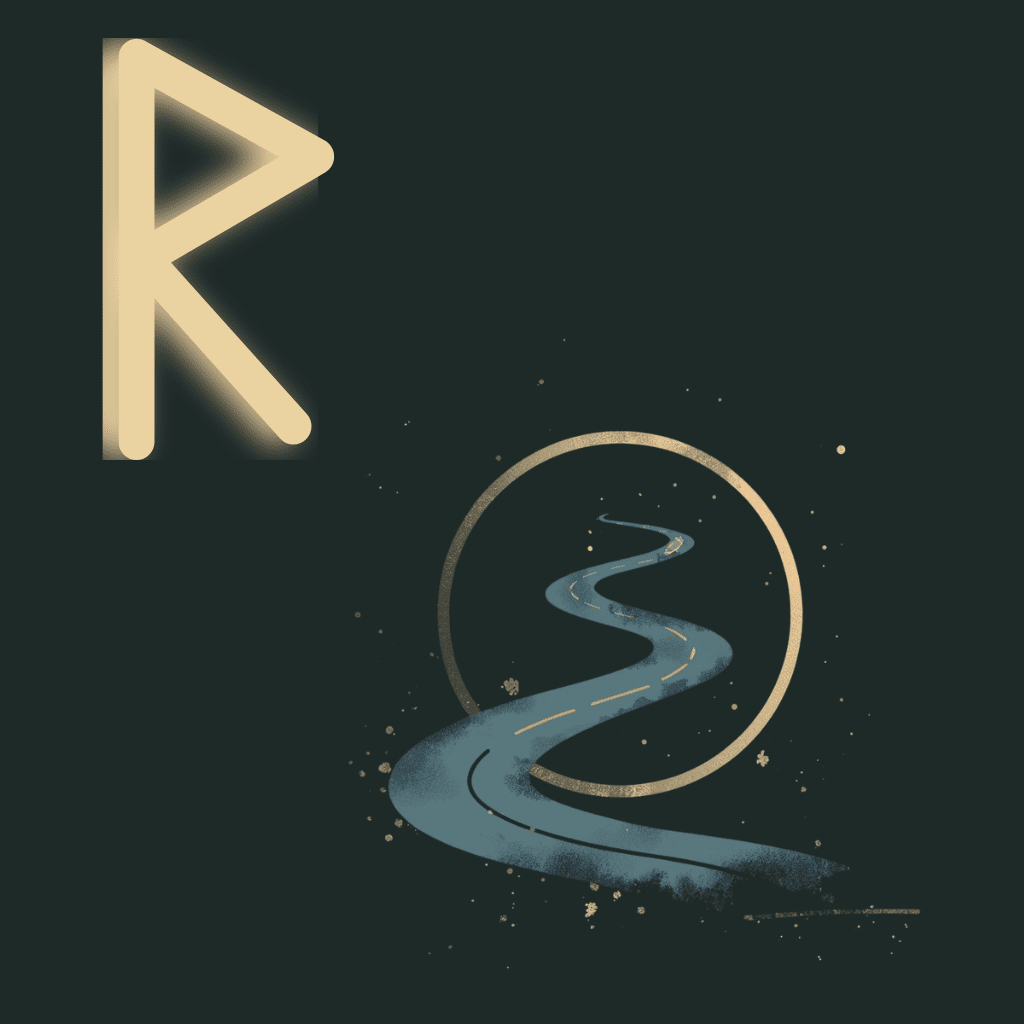
ᚱ RAIDHO — Journey
Raidho belongs to the First Ætt and emerges as the rune of movement, rhythm, and alignment with one’s life path.
Essence
Raidho is the rune of conscious movement and meaningful journey. It represents motion that is guided by inner order rather than impulse. Raidho teaches that progress is not about speed, but about moving in harmony with the right timing and direction.
At its core, Raidho is about alignment — when inner truth and outer action move together.
Element & Energy
Element: Air
Energy: Masculine
Raidho carries the dynamic quality of air in motion. Its masculine energy initiates movement, direction, and forward momentum. This is not chaotic travel, but purposeful motion shaped by awareness and rhythm.
Somatic / Energetic Layer
Raidho is felt through:
the legs, hips, and coordination of movement
the nervous system’s sense of timing
bodily alignment while walking, traveling, or transitioning
When Raidho is balanced, movement feels natural and supported. When blocked, it may manifest as restlessness, repeated delays, disorientation, or the sense of being “off track” despite effort.
Nature & Mythology
Colors: deep blue, grey, muted earth tones
Natural correspondences: roads, wheels, cycles, paths
Mythic associations: the gods as travelers, sacred journeys
Worldly layer: Midgard
Raidho belongs to the realm where humans walk their paths through the world. It reflects sacred order expressed through movement — journeys that shape character, fate, and understanding over time.
Shadow / Caution
In its shadow, Raidho may appear as:
movement without direction
rigid adherence to plans that no longer serve
impatience with timing or process
When rhythm is forced, the path loses meaning. Raidho’s caution is clear:
Not every road leads forward — and not every pause is a failure.
>>Continue to Kenaz — where movement brings illumination
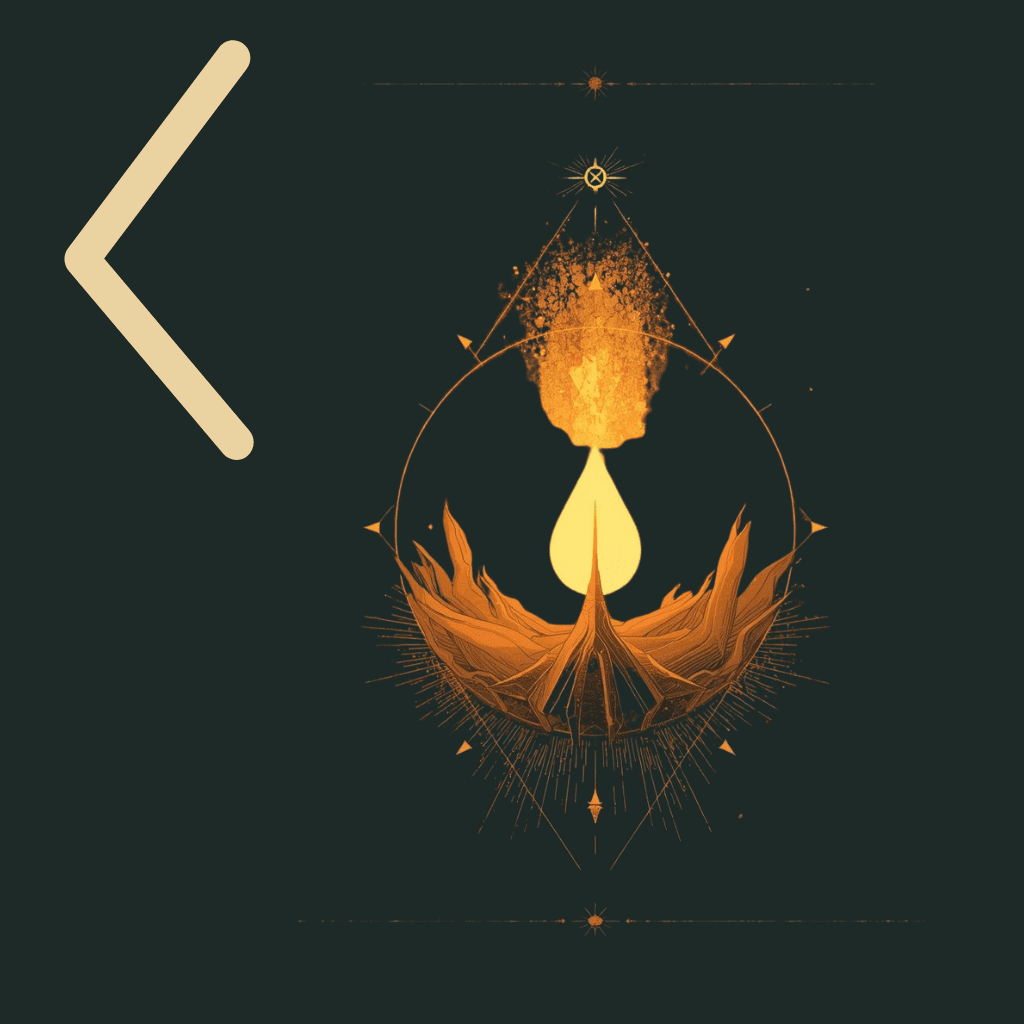
ᚲ KENAZ — Light
Kenaz belongs to the First Ætt and stands sixth in the runic system, expressing a leading fire — direction-giving light, clarity, creative seeing, and passion.
Essence
Kenaz is the rune of inner fire and conscious illumination.
It represents the moment when something becomes visible — when truth, desire, or direction steps out of darkness and can no longer be ignored. Kenaz does not force revelation; it lights the space so you can see for yourself.
Element & Energy
Element: Fire
Energy: Active, transformative, revealing
Kenaz carries focused fire — not destruction, but clarity. It sharpens awareness, fuels creativity, and brings warmth where stagnation once lived.
Somatic Layer
In the body, Kenaz is felt as warmth in the chest, belly, or hands.
It may appear as a spark of motivation, sexual vitality, creative tension, or the sensation of “I know now.” When balanced, it brings aliveness. When blocked, it can feel like burnout, inflammation, or emotional coldness.
Mythology
In Norse cosmology, fire is one of the primal forces of creation.
Together with ice, it shaped the world itself. Kenaz holds this same generative tension — the fire that does not consume, but reveals. It is the torch carried through darkness, the hearth fire that gathers people, and the inner flame that keeps consciousness awake.
Shadow
Kenaz’s shadow appears when the fire is suppressed or misused.
This can show up as creative exhaustion, emotional numbness, jealousy, or wounded desire. When the flame is denied, it may turn inward as resentment or outward as uncontrolled anger. Kenaz reminds us: fire must be tended — neither extinguished nor allowed to burn wildly.
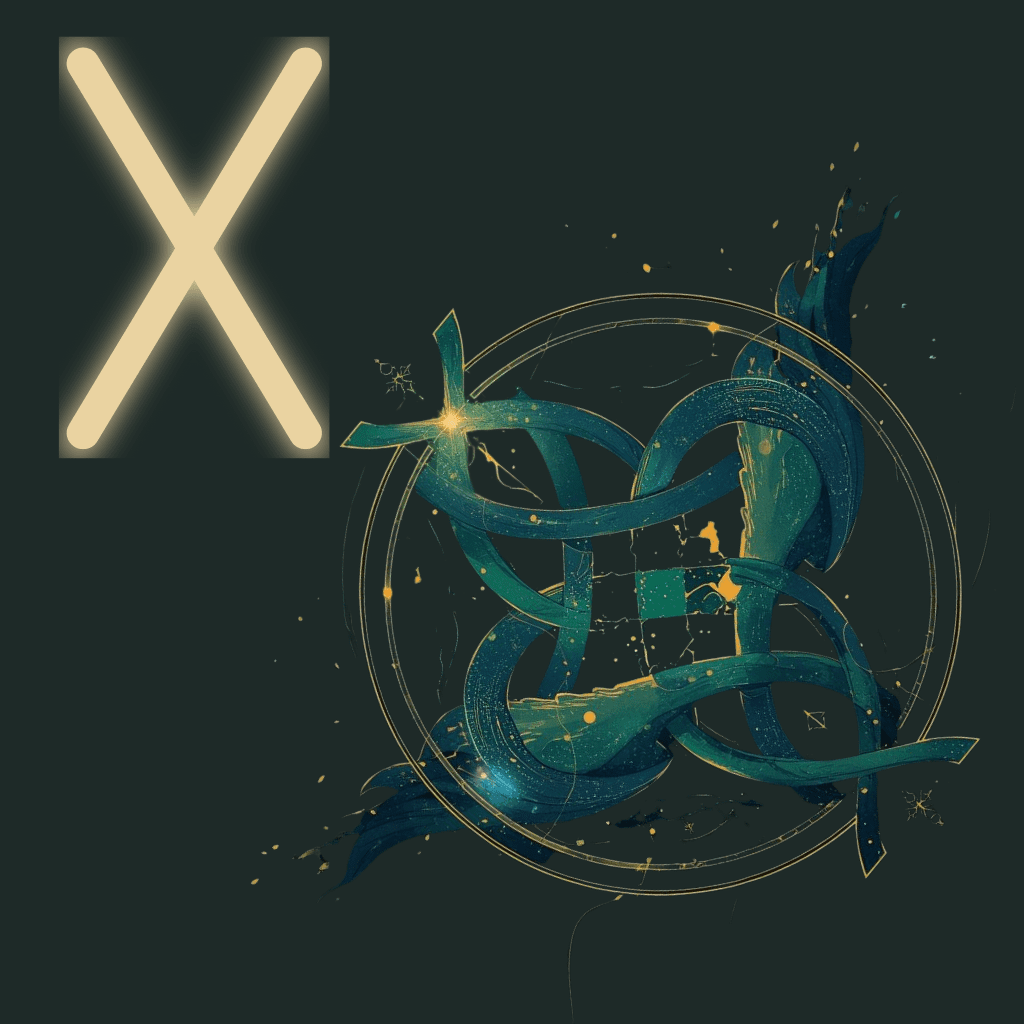
ᚷ GEBO — Gift
Gebo belongs to the First Ætt and follows illumination as the rune of gift, exchange, and balanced relationship.
Essence
Gebo is the rune of reciprocity and sacred exchange. It represents the moment where giving and receiving meet in balance, without debt or obligation. Gebo teaches that a true gift is offered freely — and accepted with equal openness.
At its core, Gebo is about mutuality: relationships, agreements, and bonds that exist only where balance is maintained.
Element & Energy
Element: Air
Energy: Masculine and Feminine
Gebo holds a dynamic equilibrium between active offering and receptive acceptance. Its dual energy allows connection without loss of self, creating relationships that remain whole rather than entangled.
Somatic / Energetic Layer
Gebo is experienced through:
the heart space and chest
relational awareness and emotional balance
the felt sense of equality in connection
When Gebo is balanced, relationships feel spacious and respectful. When blocked, it may manifest as overgiving, dependency, unspoken expectations, or imbalance between effort and return.
Nature & Mythology
Colors: soft gold, balanced neutrals
Natural correspondences: crossings, shared spaces, exchange points
Mythic associations: bonds between gods, giants, and nature spirits
Worldly layers: Asgard, Jötunheim, Vanaheim
Gebo bridges realms that are fundamentally different. Through Asgard, it reflects conscious agreements; through Jötunheim, it meets the other and the unfamiliar; through Vanaheim, it honors natural reciprocity and cycles of giving. Gebo exists wherever balance is consciously chosen between equals.
Shadow / Caution
In its shadow, Gebo may appear as:
giving with expectation
transactional relationships disguised as generosity
loss of boundaries in the name of harmony
When exchange is no longer free, Gebo dissolves. Its caution is simple and exact:
A gift ceases to be a gift the moment it demands return.
>> When balanced exchange brings harmony, it unfolds as Wunjo
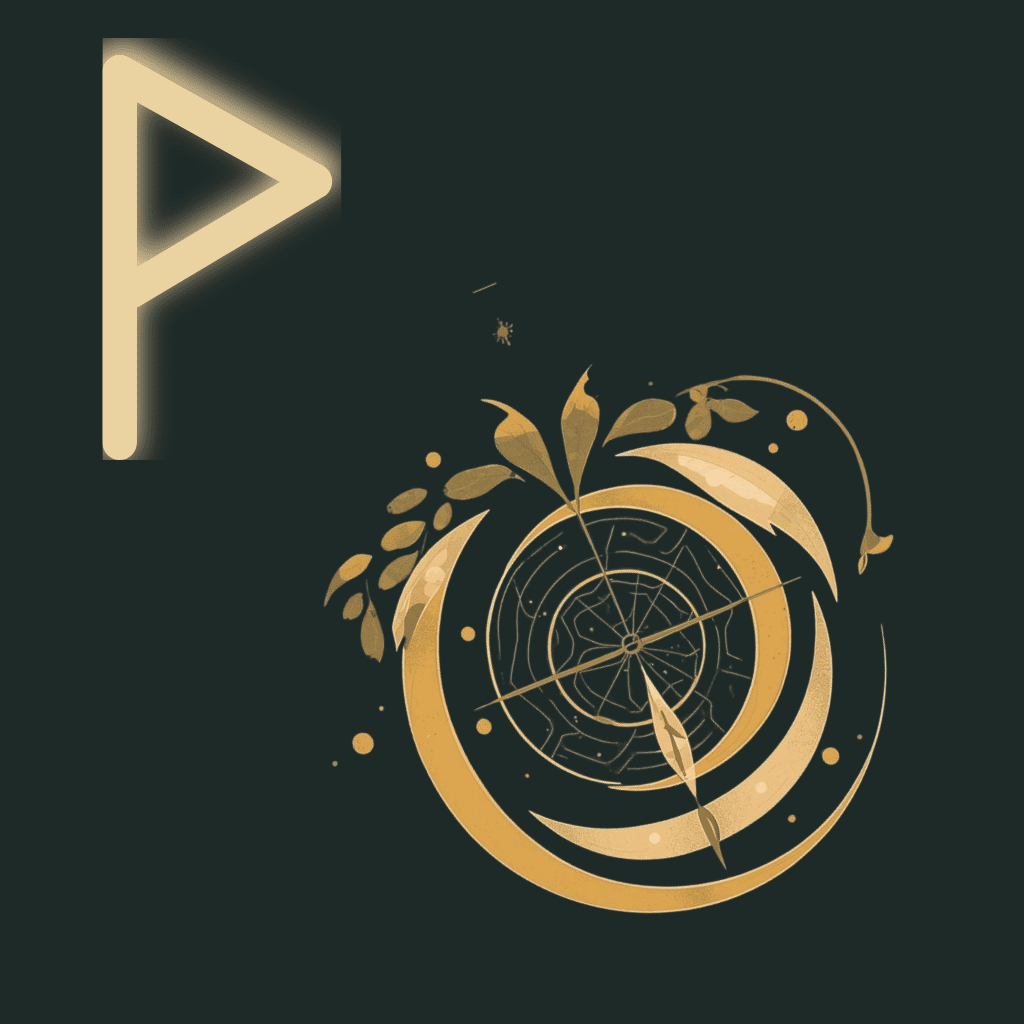
ᚹ WUNJO — Joy
Wunjo belongs to the First Ætt and brings its harmony to completion as the rune of joy, fulfillment, and inner alignment.
Essence
Wunjo is the rune of deep joy and inner harmony. It represents the state where effort settles into ease and life feels aligned from within. Wunjo is not excitement or pleasure alone, but the quiet satisfaction that arises when things are in their right place.
At its core, Wunjo reflects well-being that is shared, not forced — a natural resonance between inner state and outer life.
Element & Energy
Element: Air
Energy: Masculine
Wunjo carries a light, expansive air quality. Its masculine energy expresses joy outwardly — through connection, laughter, and shared experience. This is harmony that moves, not stagnation that rests.
Somatic / Energetic Layer
Wunjo is experienced through:
the heart and chest opening
relaxed breathing and emotional ease
a sense of lightness in the body
When Wunjo is balanced, the body feels at home in itself. When blocked, it may manifest as suppressed joy, emotional flatness, or the sense that happiness must be earned rather than allowed.
Nature & Mythology
Colors: soft yellow, light gold, warm white
Natural correspondences: clear skies, gentle wind, communal spaces
Mythic associations: shared feasts, harmony among beings
Worldly layer: Alfheim and Asgard
Wunjo belongs to the realm of lived experience, where joy arises through connection and shared presence. It reflects harmony not as an abstract ideal, but as something felt and embodied within daily life.
Shadow / Caution
In its shadow, Wunjo may appear as:
forced positivity
avoidance of necessary conflict
dependence on external approval for happiness
When joy is demanded rather than allowed, it loses depth. Wunjo offers a quiet reminder:
True joy cannot be imposed — it emerges when alignment is real.
The Second Ætt reveals the powers that break form apart — disruption, necessity, loss, and reordering — through which deeper transformation becomes possible.
ᚺ HAGALAZ — Disruption
Hagalaz belongs to the Second Ætt and marks the entry into disruption, where form is broken by forces beyond control.
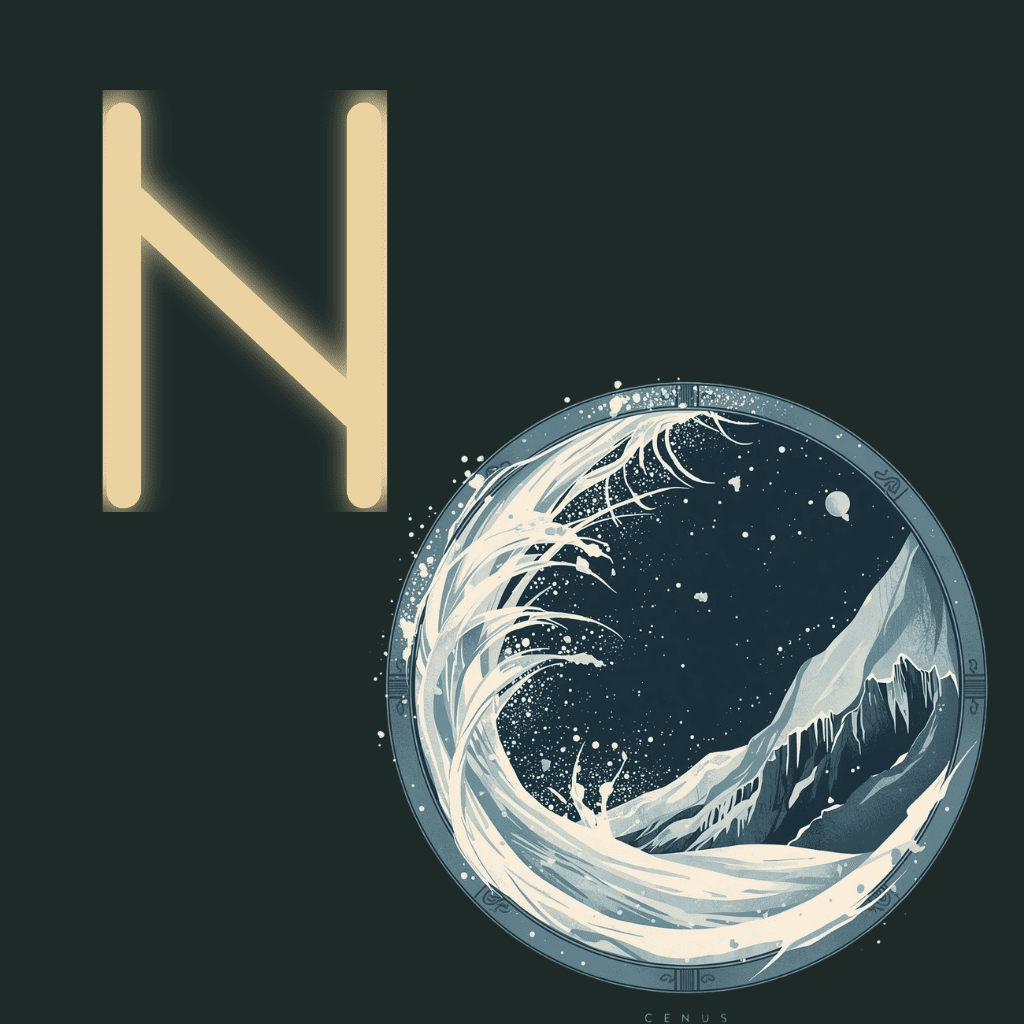
Essence
Hagalaz is the rune of disruption and unavoidable change.
It represents forces that shatter existing structures — not to punish, but to expose what cannot endure. Hagalaz arrives without negotiation, breaking patterns that have grown rigid, false, or unsustainable.
At its core, Hagalaz teaches that not all destruction is failure. Some endings are corrections — necessary interruptions that return life to truth.
Element & Energy
Element: Ice, Storm
Energy: Neutral / Impersonal
Hagalaz carries the cold force of ice and the sudden impact of storm. Its energy is not emotional or moral — it acts according to natural law. What cannot withstand reality breaks.
This is change that does not ask permission.
Somatic / Energetic Layer
Hagalaz is felt through:
shock or sudden interruption
loss of stability or familiar ground
tension held in the nervous system
a collapse of false safety
When Hagalaz moves through the body, it can feel destabilizing or disorienting. Yet once the storm passes, clarity often follows. What remains is what is real.
Nature & Mythology
Worlds: Jötunheim · Hel · Niflheim
Natural symbols: hail, frost, storms, collapsing structures
Hagalaz stands at the intersection of raw giant forces (Jötunheim), decay and endings (Hel), and cold inevitability (Niflheim). It reflects the harsh intelligence of nature — where survival depends on adaptability, not comfort.
This rune reminds us that nature does not preserve illusions.
Shadow / Caution
In its shadow, Hagalaz can manifest as:
resistance to necessary change
collapse experienced as personal failure
fear-based clinging to broken structures
chaos without integration
When Hagalaz is denied or fought, disruption repeats. Its lesson asks for surrender to what must fall — so that rebuilding can begin on truthful ground.
>>Continue to Nauthiz — where disruption reveals necessity
ᚾ NAUTHIZ — Necessity
Nauthiz belongs to the Second Ætt and follows disruption as the rune of necessity, constraint, and survival under pressure.
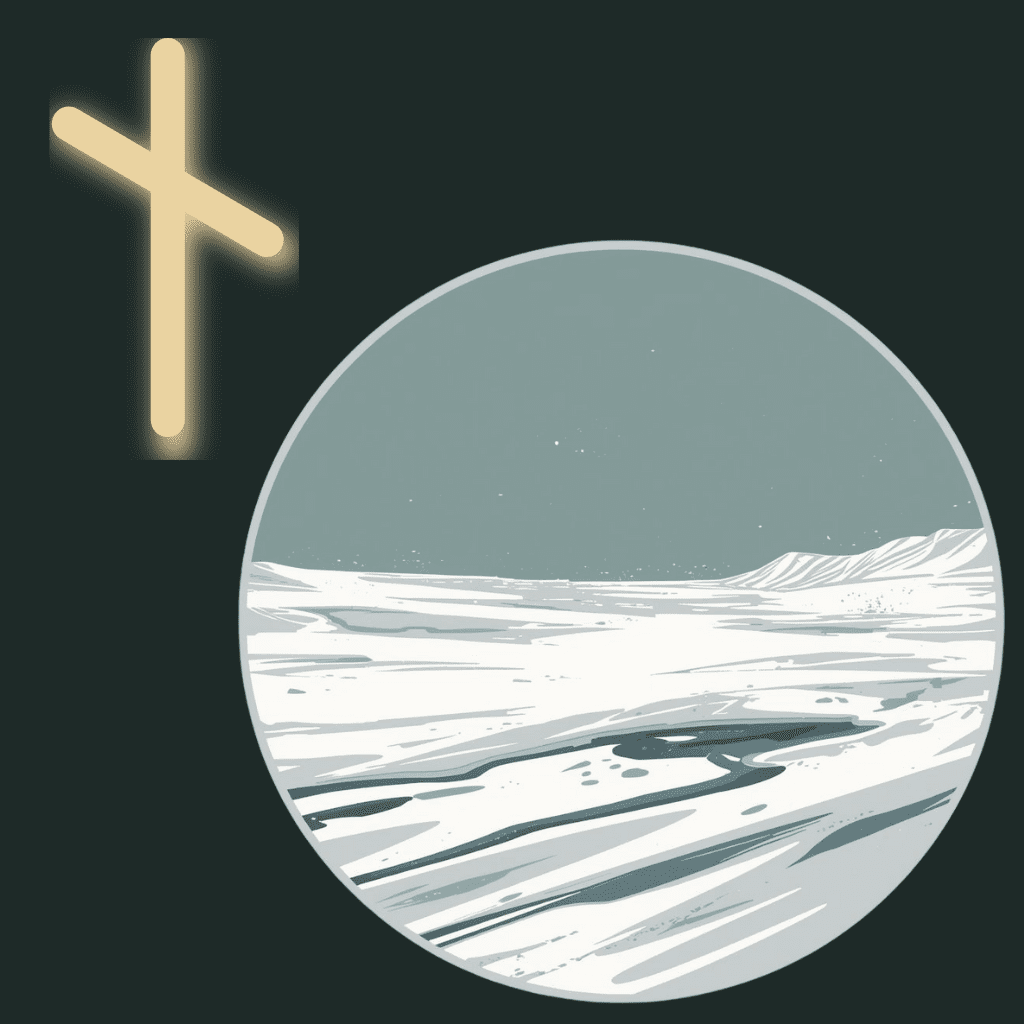
Essence
Nauthiz is the rune of necessity — the tension that arises when needs exceed available resources.
It represents situations where choice narrows, where effort is required simply to endure, and where growth is forged through restraint rather than expansion.
At its core, Nauthiz teaches discipline born of circumstance. It is the fire lit by lack, the will that forms when comfort disappears.
Element & Energy
Element: Fire (friction), Ice (restriction)
Energy: Compressive / Formative
Nauthiz carries the paradox of cold and heat together: restriction that generates friction, and pressure that ignites inner resolve. Its energy shapes through limits, forcing attention, economy, and precision.
This is the fire that burns because it must.
Somatic / Energetic Layer
Nauthiz is felt through:
tightness in the chest or jaw
hunger, fatigue, or unfulfilled need
sustained effort without immediate relief
heightened focus under strain
In the body, Nauthiz can feel uncomfortable or exhausting. Yet it also strengthens endurance. When met consciously, it builds resilience and clarity of priority.
Nature & Mythology
Worlds: Niflheim · Muspelheim · Midgard
Natural symbols: friction fire, hunger, cold nights, endurance tools
Nauthiz stands where Niflheim’s cold lack meets Muspelheim’s burning pressure, manifesting in Midgard as hunger, hardship, and survival challenges. It reflects the human condition when resources are scarce and perseverance becomes essential.
This rune speaks of life shaped by necessity — not choice, but response.
Shadow / Caution
In its shadow, Nauthiz can manifest as:
chronic deprivation or self-denial
bitterness formed through prolonged struggle
over-identification with hardship
hardness of heart
When necessity is internalized as identity, Nauthiz becomes constriction without growth. Its lesson asks for conscious engagement: to endure without becoming closed.
ᛁ ISA — Stillness
Isa belongs to the Second Ætt and brings movement to a halt, expressing stillness, cold, and enforced pause.
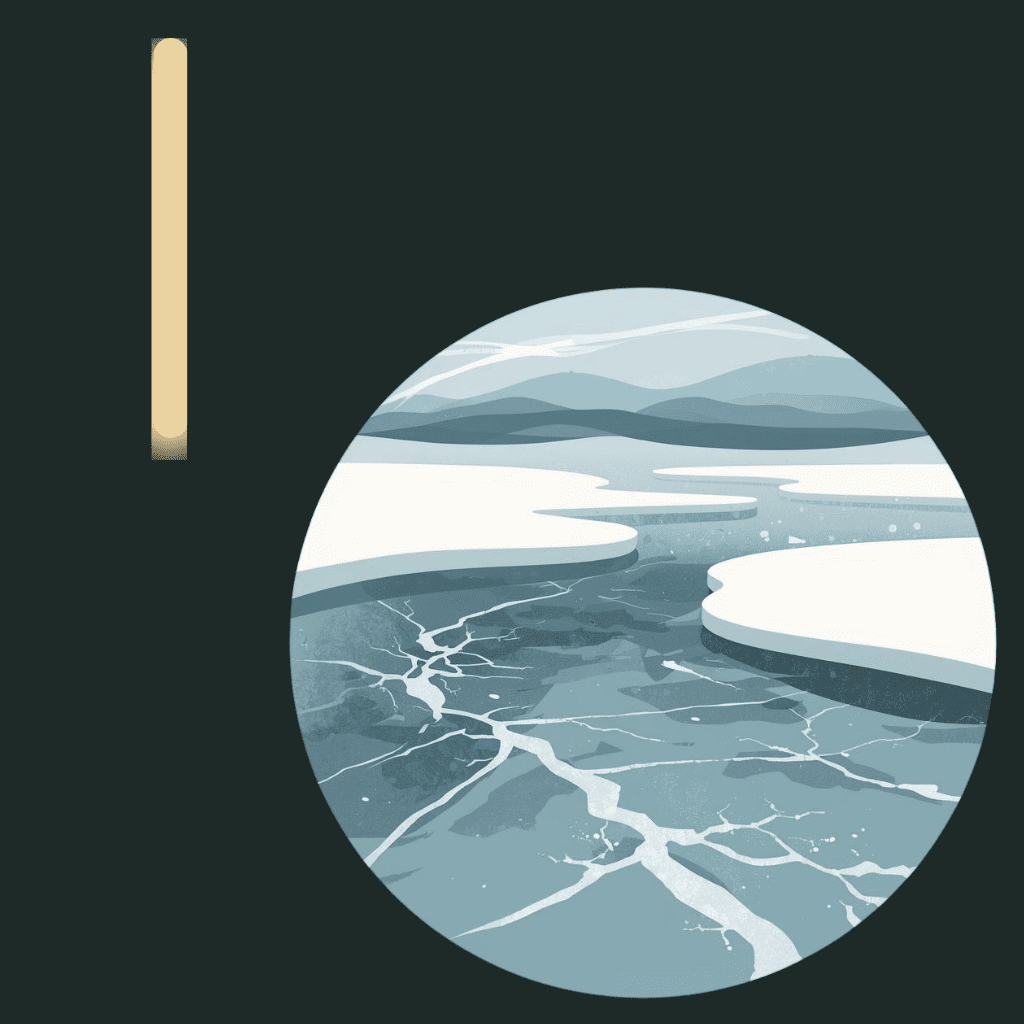
Essence
Isa is the rune of stillness and complete standstill.
It represents a moment where motion ceases — not as rest, but as suspension. Nothing advances, nothing retreats. Life is held in place.
At its core, Isa teaches the power and difficulty of non-movement. When action is impossible, awareness becomes the only remaining agency.
Element & Energy
Element: Ice
Energy: Contractive / Inhibiting
Isa carries the cold, stabilizing force of ice. Its energy does not transform — it preserves, arrests, and freezes. This is not gentle stillness, but a condition where momentum is denied.
Isa stops what cannot continue.
Somatic / Energetic Layer
Isa is felt through:
numbness or emotional shutdown
rigidity in the body
slowed processes or fatigue
a sense of being “stuck”
In the body, Isa may feel like heaviness or withdrawal. Yet within this pause lies clarity: when movement stops, perception sharpens.
Nature & Mythology
Worlds: Niflheim · Jötunheim
Natural symbols: ice, frost, frozen waters, winter stillness
Isa emerges from the cold depths of Niflheim and the massive, unmoving forces of Jötunheim. It reflects winter not as death, but as suspension — a time when life withdraws and waits.
This rune holds the intelligence of waiting.
Shadow / Caution
In its shadow, Isa can manifest as:
stagnation without awareness
emotional withdrawal or isolation
fear of movement after stillness
paralysis disguised as safety
When Isa is resisted or prolonged beyond its purpose, stillness hardens into inertia. Its lesson asks for patience without denial — to remain present until movement becomes possible again.
ᛃ JERA — Cycle
Jera belongs to the Second Ætt and restores rhythm through cycles, showing that effort unfolds in time.
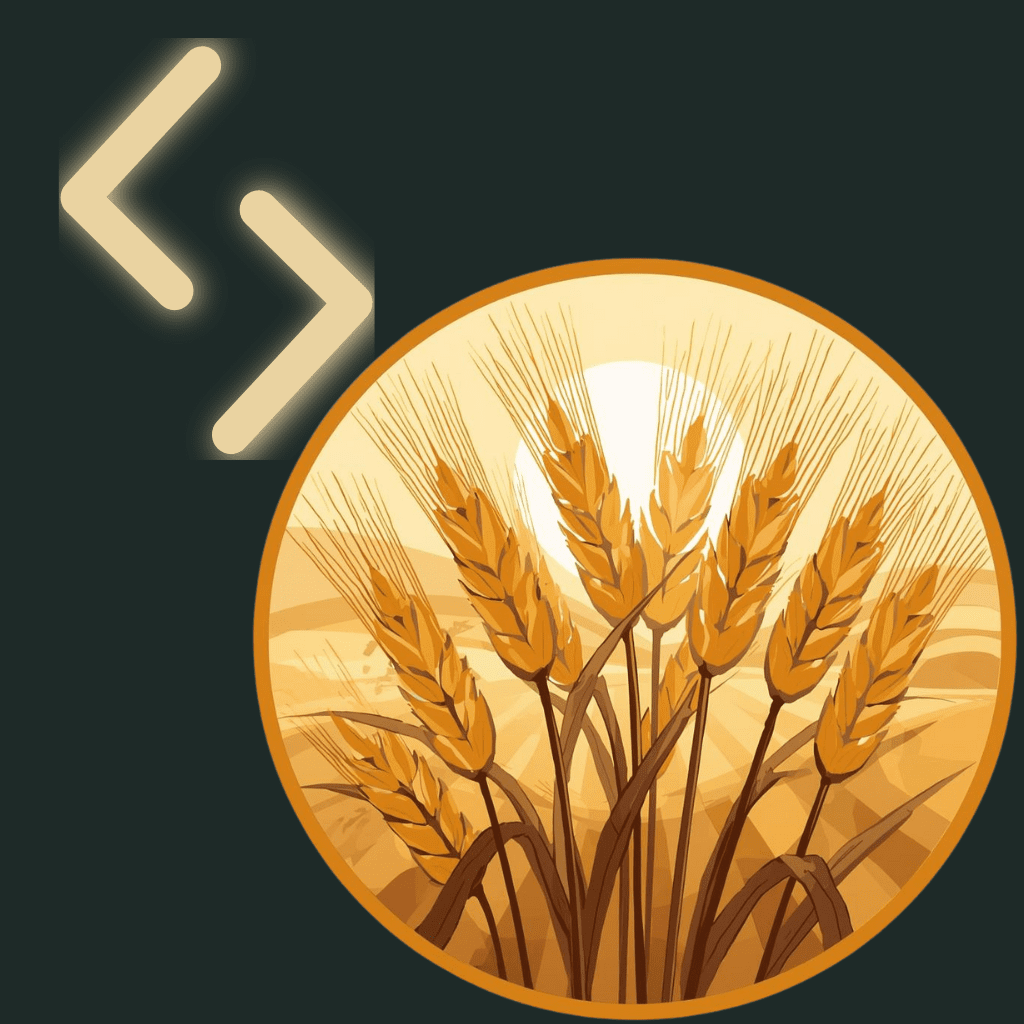
Essence
Jera is the rune of cycles, return, and earned outcome.
It represents the movement of time that cannot be rushed — where cause and effect unfold according to their own rhythm. Jera reminds us that results are not immediate rewards, but the consequence of sustained effort and patience.
At its core, Jera teaches that growth is not forced. It arrives when its season is complete.
Element & Energy
Element: Earth
Energy: Rhythmic / Regenerative
Jera carries the grounded intelligence of earth in motion — slow, reliable, and cyclical. Its energy is neither expanding nor contracting, but turning, returning life to balance through repetition and time.
This is movement that matures.
Somatic / Energetic Layer
Jera is felt through:
steady energy returning after stagnation
bodily rhythms finding balance
patience settling into the nervous system
trust in long-term processes
In the body, Jera brings a sense of continuity. Healing, learning, and growth resume — not abruptly, but in phases that build upon one another.
Nature & Mythology
Worlds: Midgard · Alfheim
Natural symbols: seasons, harvest, cultivated land, time-bound growth
Jera belongs to Midgard, where human effort meets consequence, and to Alfheim, where natural cycles unfold with quiet intelligence. It reflects the truth that nothing ripens instantly — all things require their season.
This rune carries the promise of return.
Shadow / Caution
In its shadow, Jera can manifest as:
impatience with natural timing
repetition without learning
clinging to cycles that have already ended
expectation of reward without effort
When time is pressured, Jera resists. Its lesson is firm but fair:
What is rushed cannot ripen.
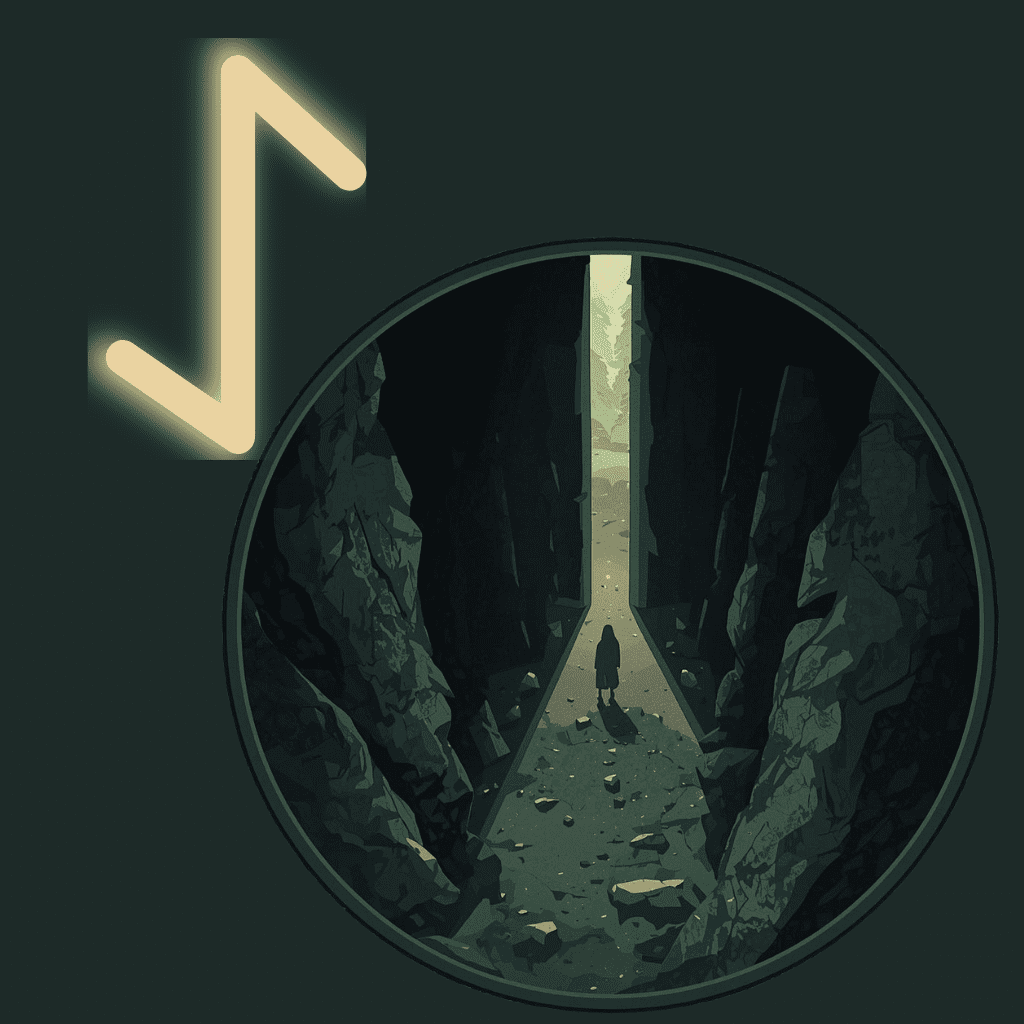
ᛇ EIHWAZ — Endurance
Eihwaz belongs to the Second Ætt and holds endurance at the threshold between life, death, and transformation.
Essence
Eihwaz is the rune of endurance, inner axis, and sustained presence through transition.
It does not move forward or backward, but holds — maintaining alignment when forces pull toward collapse or escape. Eihwaz represents the capacity to remain intact through uncertainty, loss, and deep change.
At its core, Eihwaz teaches strength that does not resist transformation, but survives it.
Element & Energy
Element: Earth (deep root)
Energy: Neutral / Stabilizing
Eihwaz carries a vertical, stabilizing force — like a tree rooted deeply while exposed to changing conditions above. Its energy does not push or withdraw; it anchors.
This is resilience without rigidity.
Somatic / Energetic Layer
Eihwaz is felt through:
the spine and skeletal structure
deep steadiness under emotional pressure
the ability to remain present during endings
quiet strength that does not seek recognition
In the body, Eihwaz can feel heavy but reliable. It supports long-term endurance, especially during periods where outcomes are unclear.
Nature & Mythology
Worlds: Hel · Svartalfheim
Natural symbols: yew tree, roots, underground passages, axis points
Eihwaz stands between worlds — rooted in Hel’s depth and Svartalfheim’s hidden structure. Like the yew tree, it connects life and death, decay and continuity. It reflects passage rather than destination.
This rune guards the threshold.
Shadow / Caution
In its shadow, Eihwaz can manifest as:
rigidity mistaken for strength
refusal to let go when transition is required
endurance that becomes silent suffering
fear of change masked as loyalty
When endurance turns into immobility, Eihwaz loses balance. Its lesson asks for discernment:
Hold what must endure — release what must pass.
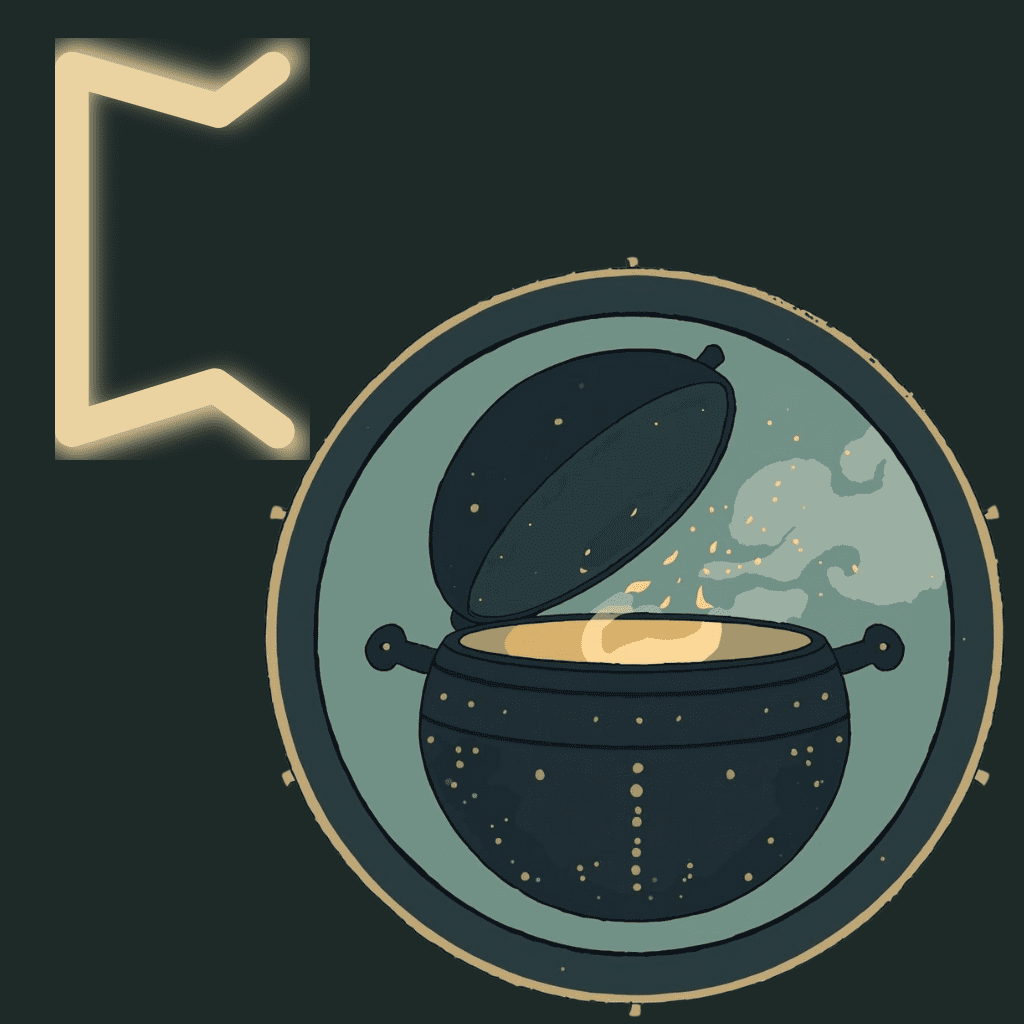
ᛈ PERTHRO — Unfolding
Perthro belongs to the Second Ætt and introduces the hidden workings of chance, fate, and unfolding patterns.
Essence
Perthro is the rune of unfolding — of that which is not fully known until it is entered.
It represents chance, mystery, and the hidden structures that shape outcomes beyond conscious control. Perthro does not reveal itself through prediction, but through participation.
At its core, Perthro teaches that some truths emerge only when risk is taken and the unknown is engaged.
Element & Energy
Element: Water (depth)
Energy: Receptive / Uncertain
Perthro carries the fluid, veiled quality of deep water. Its energy is receptive rather than directive, allowing events to take shape through interaction rather than intention.
This is movement guided by what cannot be fully seen.
Somatic / Energetic Layer
Perthro is felt through:
sensations of uncertainty or anticipation
intuitive pulls without clear rationale
emotional openness to outcome
vulnerability in the face of the unknown
In the body, Perthro may feel like a loosening of control. It invites trust — not in certainty, but in process.
Nature & Mythology
Worlds: Svartalfheim · Midgard
Natural symbols: concealed spaces, games of chance, vessels, casting
Perthro bridges Svartalfheim’s hidden mechanics and Midgard’s lived experience. It reflects the unseen patterns that influence human life — fate encountered not as destiny fixed, but as probability revealed through action.
This rune governs the moment when outcome becomes possible.
Shadow / Caution
In its shadow, Perthro can manifest as:
avoidance of responsibility masked as “fate”
gambling without awareness
fear of engaging the unknown
overreliance on divination without embodiment
When mystery is used to escape accountability, Perthro distorts. Its lesson is clear:
What unfolds still requires presence.
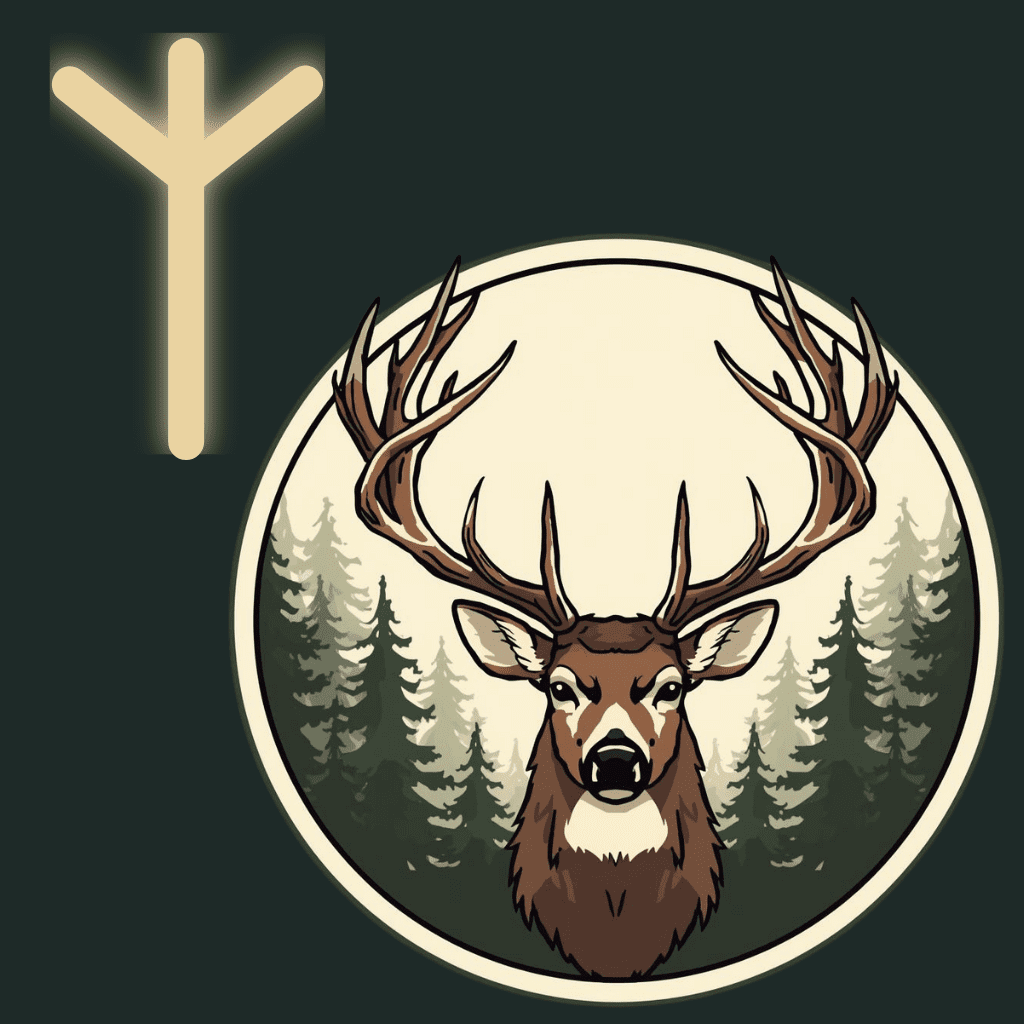
ᛉ ALGIZ — Protection
Algiz belongs to the Second Ætt and establishes protection through awareness, boundaries, and alert presence.
Essence
Algiz is the rune of protection through consciousness.
It does not shield by force or isolation, but through heightened awareness and correct positioning. Algiz represents the moment when one senses danger before it strikes and adjusts accordingly.
At its core, Algiz teaches that true protection arises from attunement, not defense alone.
Element & Energy
Element: Air
Energy: Active / Alert
Algiz carries the quality of alert air — receptive, responsive, and ready to move. Its energy is outward-facing, scanning the environment and responding before threat becomes impact.
This is protection that listens.
Somatic / Energetic Layer
Algiz is felt through:
heightened sensory awareness
upright posture and balanced stance
quick reflexes and readiness
clear perception of personal boundaries
In the body, Algiz brings a sense of alert calm. It sharpens perception without tipping into anxiety when held correctly.
Nature & Mythology
Worlds: Midgard
Natural symbols: antlers, outstretched limbs, lookout points
Algiz is rooted in Midgard — the realm of lived reality and daily navigation. It reflects protection as a practical skill: awareness of surroundings, respect for limits, and the ability to respond rather than react.
This rune guards life through presence.
Shadow / Caution
In its shadow, Algiz can manifest as:
hypervigilance or paranoia
rigid defensiveness
fear-driven withdrawal
misinterpreting control as safety
When awareness turns into fear, Algiz collapses inward. Its lesson asks for balance:
Protection requires openness as much as caution.
>>Continue to Sowilo — where awareness integrates into wholeness
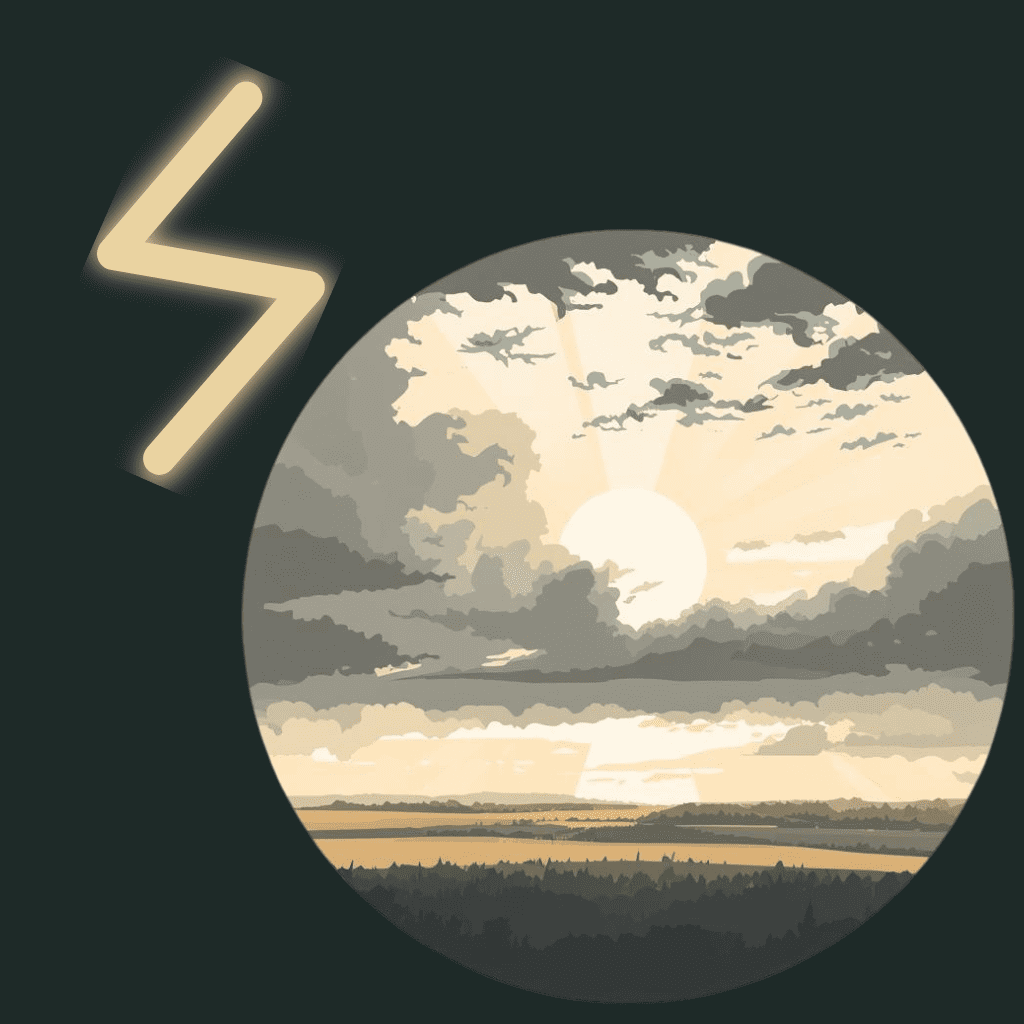
SOWILO — Wholeness
Sowilo belongs to the Second Ætt and completes its trial through clarity, vitality, and restored wholeness.
Essence
Sowilo is the rune of wholeness regained.
It represents the moment when fragmentation resolves and life force returns to coherence. After disruption, necessity, stillness, endurance, and protection, Sowilo restores alignment — not by erasing what was endured, but by integrating it.
At its core, Sowilo teaches that wholeness is not innocence. It is clarity earned through passage.
Element & Energy
Element: Fire (solar)
Energy: Expansive / Integrative
Sowilo carries the integrating power of solar fire — warming, energizing, and unifying. Its energy gathers what has been scattered and brings it into a living center.
This is fire that heals rather than burns.
Somatic / Energetic Layer
Sowilo is felt through:
renewed vitality and strength
ease returning to the body
confidence rooted in lived experience
warmth spreading through the chest and limbs
In the body, Sowilo feels like recovery after hardship. Energy flows again, not frantically, but steadily and with purpose.
Nature & Mythology
Worlds: Alfheim · Asgard
Natural symbols: sun, clear light, life-sustaining warmth
Sowilo carries the luminous clarity of Alfheim and the ordered vitality of Asgard. It reflects solar force not as dominance, but as the sustaining rhythm that allows life to flourish after trial.
This rune completes the Second Ætt by restoring life’s coherence.
Shadow / Caution
In its shadow, Sowilo can manifest as:
overconfidence following recovery
denial of lingering wounds
fixation on “positivity” without integration
burning out through excess
When wholeness is claimed too quickly, Sowilo loses depth. Its caution is precise:
True vitality includes what has been endure
The Third Ætt carries the movement toward integration, fate, and conscious completion, where individual will meets greater order and destiny unfolds.
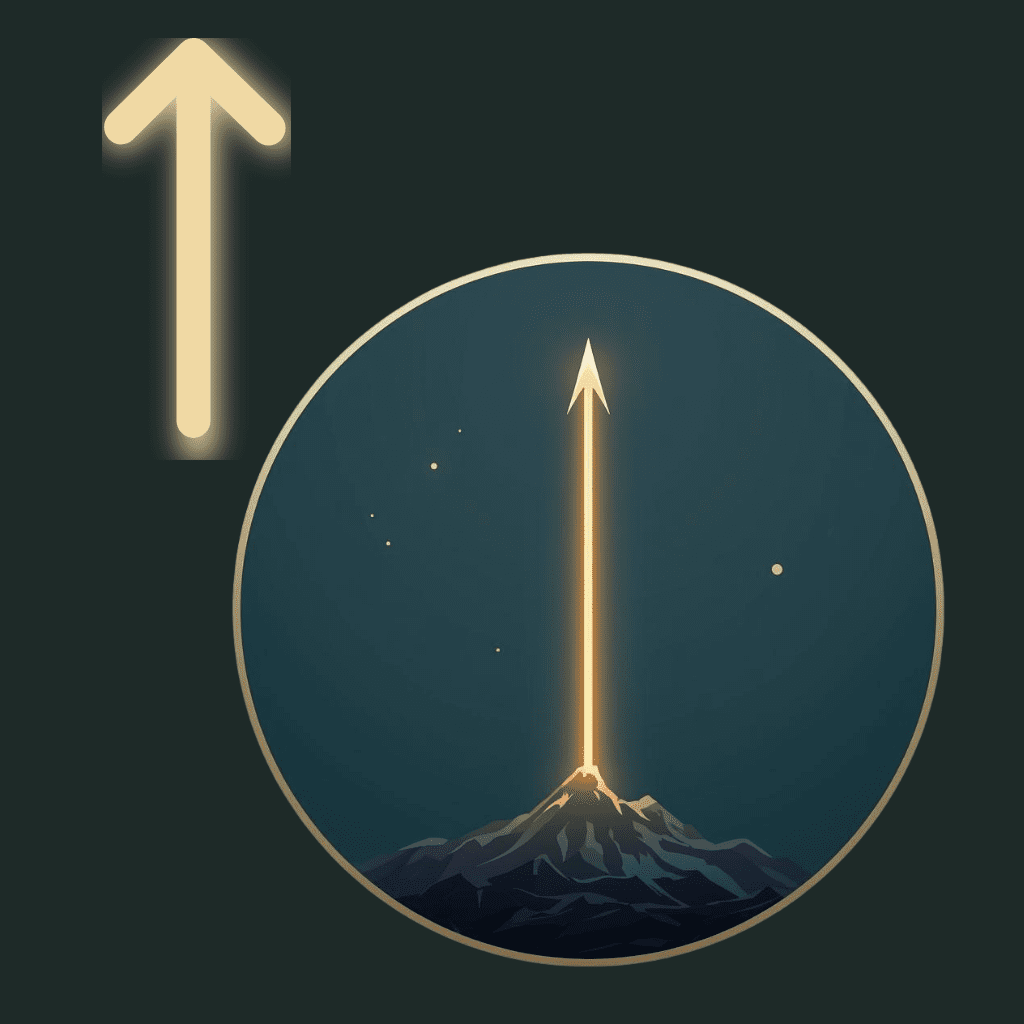
ᛏ TIWAZ — Integrity
Tiwaz belongs to the Third Ætt and initiates conscious responsibility through integrity, truth, and ethical direction.
Essence
Tiwaz is the rune of integrity and right action.
It represents commitment to truth even when the cost is personal. Tiwaz does not promise ease or reward; it demands alignment between intention, word, and deed.
At its core, Tiwaz teaches that direction without integrity leads nowhere. True progress requires the courage to act in accordance with what is right — not what is convenient.
Element & Energy
Element: Air (directed will)
Energy: Focused / Ethical
Tiwaz carries a sharpened, forward-moving energy. It cuts through ambiguity and hesitation, establishing a clear line of intention. This is not forceful aggression, but disciplined resolve.
Tiwaz moves straight and without hesitation.
Somatic / Energetic Layer
Tiwaz is felt through:
upright posture and inner alignment
clarity in decision-making
tension held with purpose rather than fear
the strength to stand alone if necessary
In the body, Tiwaz brings a sense of inner straightness. It may feel demanding, but it stabilizes the nervous system through clear orientation.
Nature & Mythology
World: Asgard
Natural symbols: spear, axis, upward-pointing force
Tiwaz is rooted in Asgard, the realm of order, law, and conscious responsibility. Associated with the god Tyr, this rune reflects sacrifice made in service of greater balance. It embodies leadership that is earned, not claimed.
This rune governs ethical direction.
Shadow / Caution
In its shadow, Tiwaz can manifest as:
rigid moralism
self-righteousness
force without listening
sacrifice made without wisdom
When integrity hardens into ideology, Tiwaz loses balance. Its lesson is precise:
Truth must remain alive, not imposed.
>>Continue to Berkana — where alignment gives rise to growth
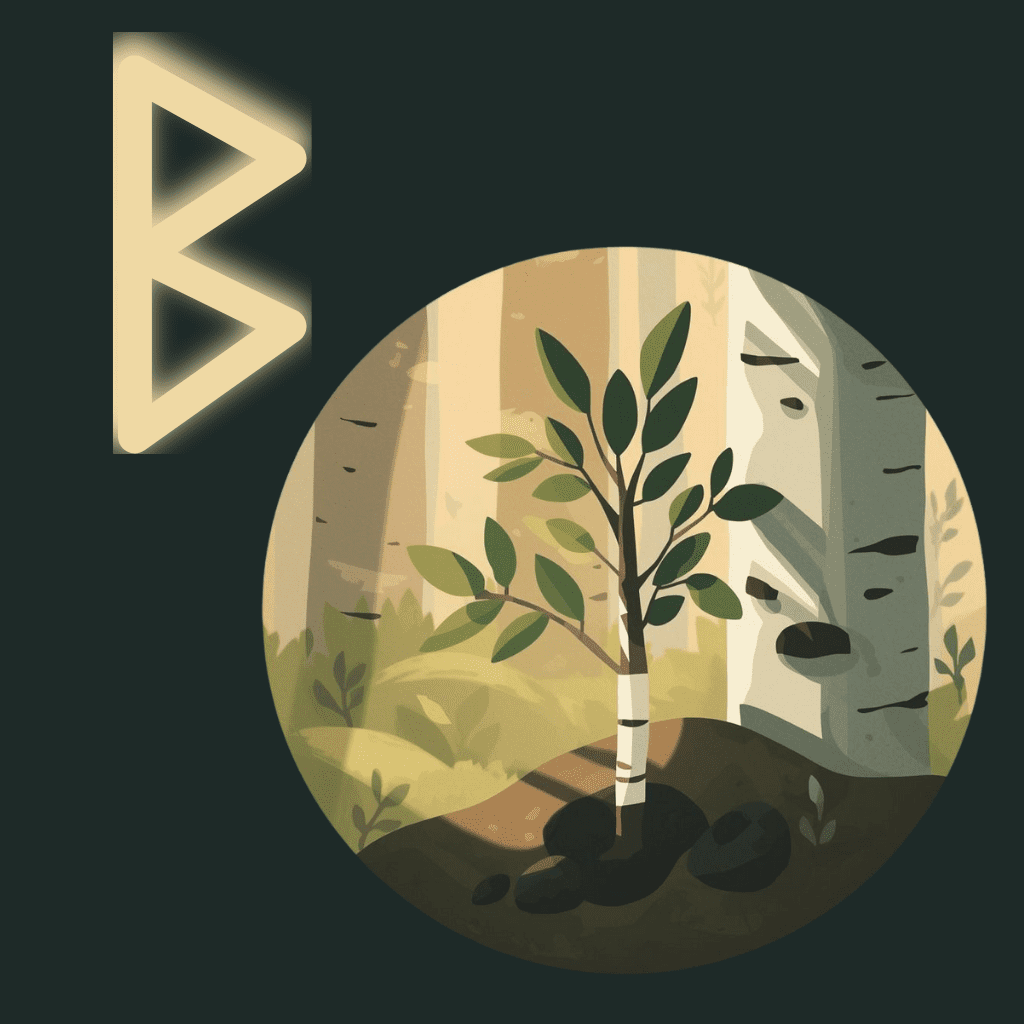
ᛒ BERKANA — Becoming
Berkana belongs to the Third Ætt and brings renewal through growth, care, and becoming.
Essence
Berkana is the rune of becoming — growth that is protected, nourished, and allowed to unfold.
It represents life emerging after alignment has been chosen: not through force, but through care, patience, and steady presence. Berkana does not rush development; it creates the conditions in which growth can occur safely.
At its core, Berkana teaches that true creation requires containment. What is alive must be tended before it can stand on its own.
Element & Energy
Element: Earth (fertile)
Energy: Nurturing / Regenerative
Berkana carries a soft but persistent earth energy. It supports processes that grow quietly, beneath the surface, through repetition and care rather than intensity.
This is strength expressed as protection.
Somatic / Energetic Layer
Berkana is felt through:
softness returning to the body
warmth in the lower abdomen and chest
a sense of safety that allows growth
rhythms of rest and renewal
In the body, Berkana supports recovery and regeneration. It invites slowing down enough for life to take hold.
Nature & Mythology
Worlds: Vanaheim · Hel
Natural symbols: birch tree, womb, sheltering spaces
Berkana bridges Vanaheim’s life-giving fertility and Hel’s depth of regeneration. It reflects cycles of birth and renewal that include decay as part of creation. Growth here is not naive — it is rooted in the full spectrum of life.
This rune governs protected beginnings.
Shadow / Caution
In its shadow, Berkana can manifest as:
overprotection that limits growth
clinging to dependency
fear of letting what has grown stand alone
nurturing without boundaries
When care becomes control, Berkana suffocates what it seeks to protect. Its lesson is subtle:
To nurture is also to release.
>>Continue to Ehwaz — where growth learns to move with others
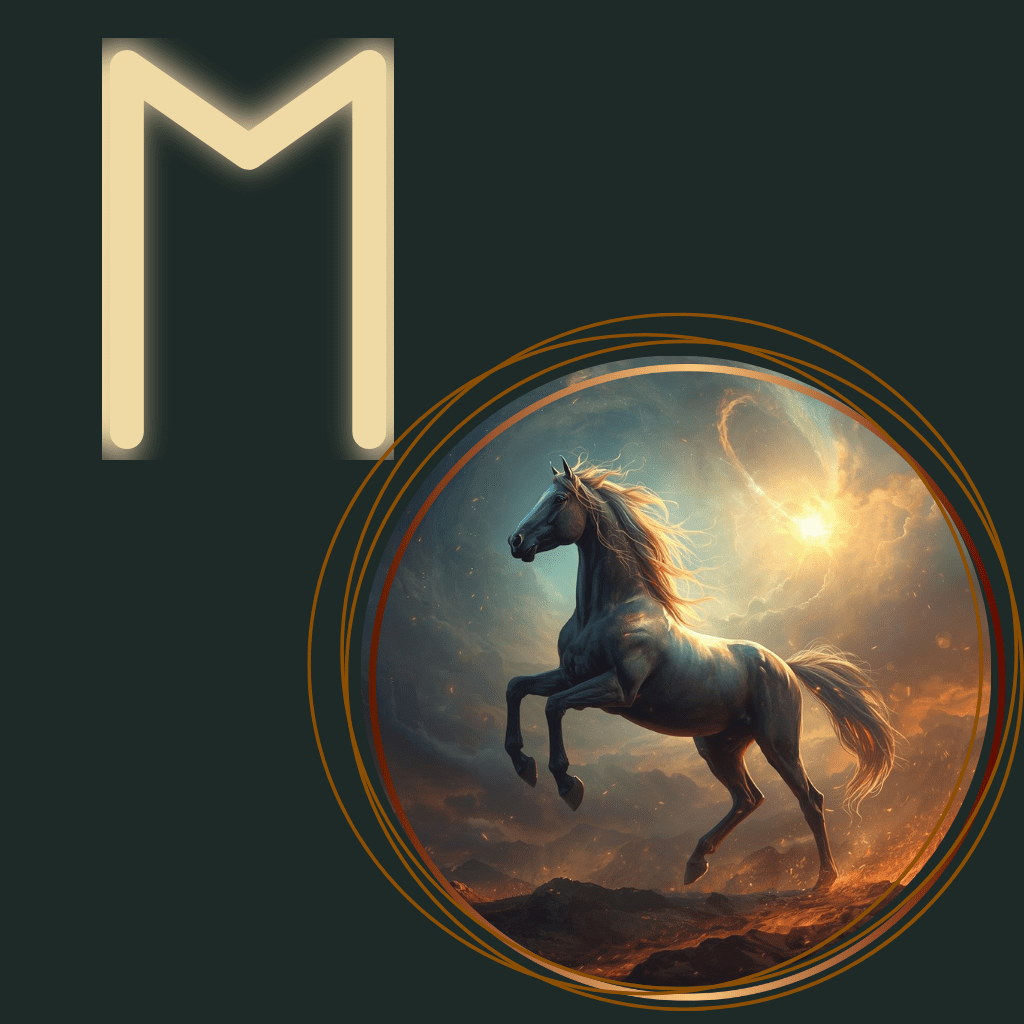
ᛖ EHWAZ — Movement
Ehwaz belongs to the Third Ætt and expresses movement through trust, cooperation, and shared direction.
Essence
Ehwaz is the rune of movement born of relationship.
It represents progress that becomes possible only when two forces move together — neither dominating nor withdrawing. Ehwaz teaches that true movement is not solitary; it arises through mutual trust and responsiveness.
At its core, Ehwaz reveals that alignment is not static. It must be lived, tested, and adjusted through interaction.
Element & Energy
Element: Air (dynamic exchange)
Energy: Cooperative / Responsive
Ehwaz carries a living, responsive energy. It does not push forward blindly, nor does it wait passively. Instead, it listens and adjusts, allowing momentum to build through coordination.
This is movement that depends on connection.
Somatic / Energetic Layer
Ehwaz is felt through:
synchronized movement and rhythm
ease in shared action
trust in timing and response
balanced activation between self and other
In the body, Ehwaz supports coordination and flow. It may be felt in walking, riding, or any movement that relies on attunement rather than control.
Nature & Mythology
World: Hel
Natural symbols: horse and rider, paired movement, pathways
Ehwaz reflects movement that crosses thresholds. Rooted in Hel, it carries the wisdom of transition — movement that requires trust because ground is not always visible. It governs passages where cooperation determines whether progress is possible.
This rune teaches partnership under uncertainty.
Shadow / Caution
In its shadow, Ehwaz can manifest as:
dependence mistaken for cooperation
loss of direction through over-adaptation
mistrust that breaks movement
forced alignment
When partnership loses balance, movement collapses. Ehwaz reminds us that cooperation requires clarity as much as trust.
>>Continue to Mannaz — where cooperation becomes self-awareness
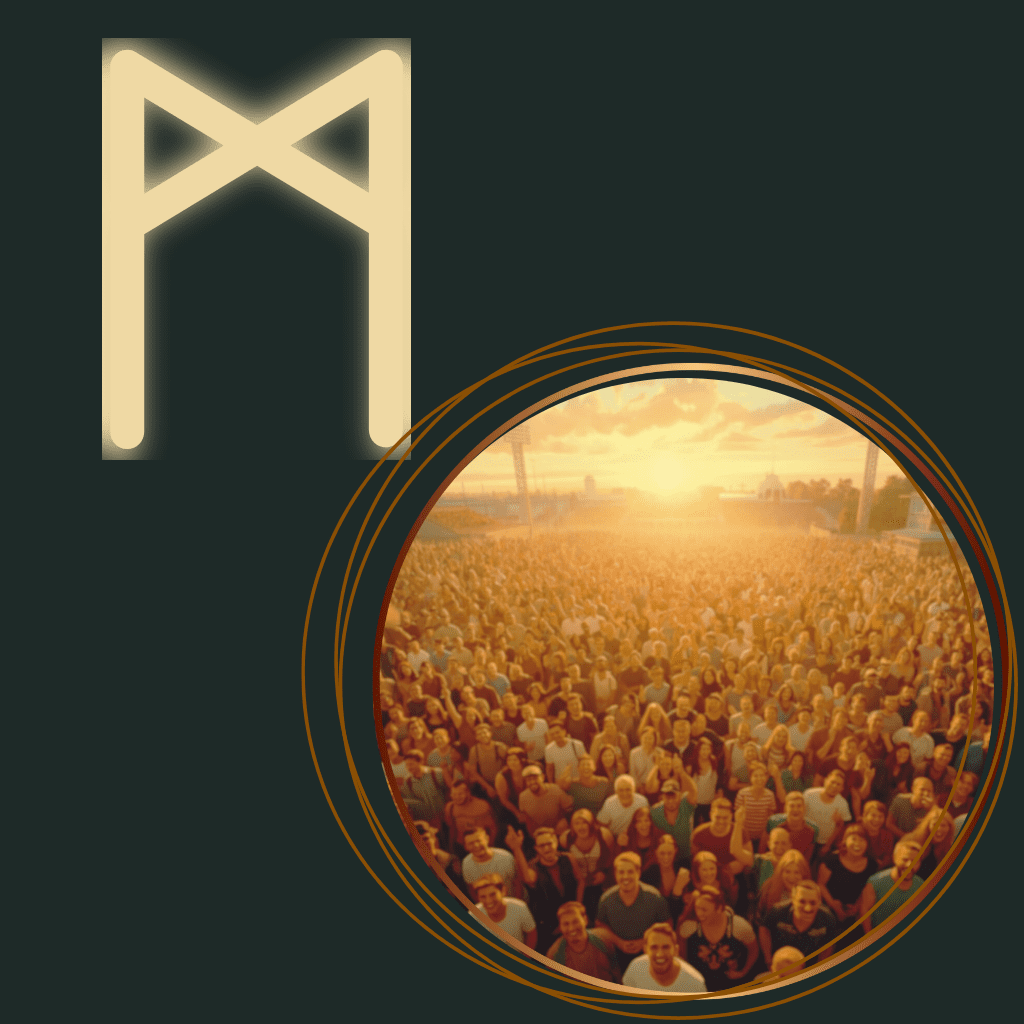
ᛗ MANNAZ — Humanity
Mannaz belongs to the Third Ætt and centers awareness on humanity, self-reflection, and collective identity.
Essence
Mannaz is the rune of humanity and conscious self-awareness.
It represents the moment when relationship turns inward — when cooperation, movement, and exchange give rise to reflection and understanding of the self within the whole. Mannaz asks not who am I alone, but who am I among others.
At its core, Mannaz teaches that identity is relational. We come to know ourselves through encounter, mirroring, and shared meaning
Element & Energy
Element: Air (awareness)
Energy: Reflective / Integrative
Mannaz carries the clear, cognitive quality of air — perception, thought, and recognition. Its energy integrates experience into understanding, allowing insight to arise through observation rather than reaction.
This is awareness that looks back at itself.
Somatic / Energetic Layer
Mannaz is felt through:
clarity in self-perception
awareness of mental patterns
recognition of one’s place within a group
balanced presence between individuality and belonging
In the body, Mannaz often manifests as calm alertness. It supports integration between mind and environment, reducing fragmentation.
Nature & Mythology
World: Midgard
Natural symbols: human form, mirrors, meeting points
Mannaz is rooted in Midgard, the realm of human experience and shared reality. It reflects humanity not as dominance over nature, but as participation within it — conscious, responsible, and relational.
This rune governs selfhood within community.
Shadow / Caution
In its shadow, Mannaz can manifest as:
-
over-identification with roles or labels
-
separation from others through ego or superiority
-
loss of self through conformity
-
intellectualization without embodiment
When reflection becomes self-absorption, Mannaz disconnects. Its lesson is balance:
Self-awareness must remain grounded in relationship.
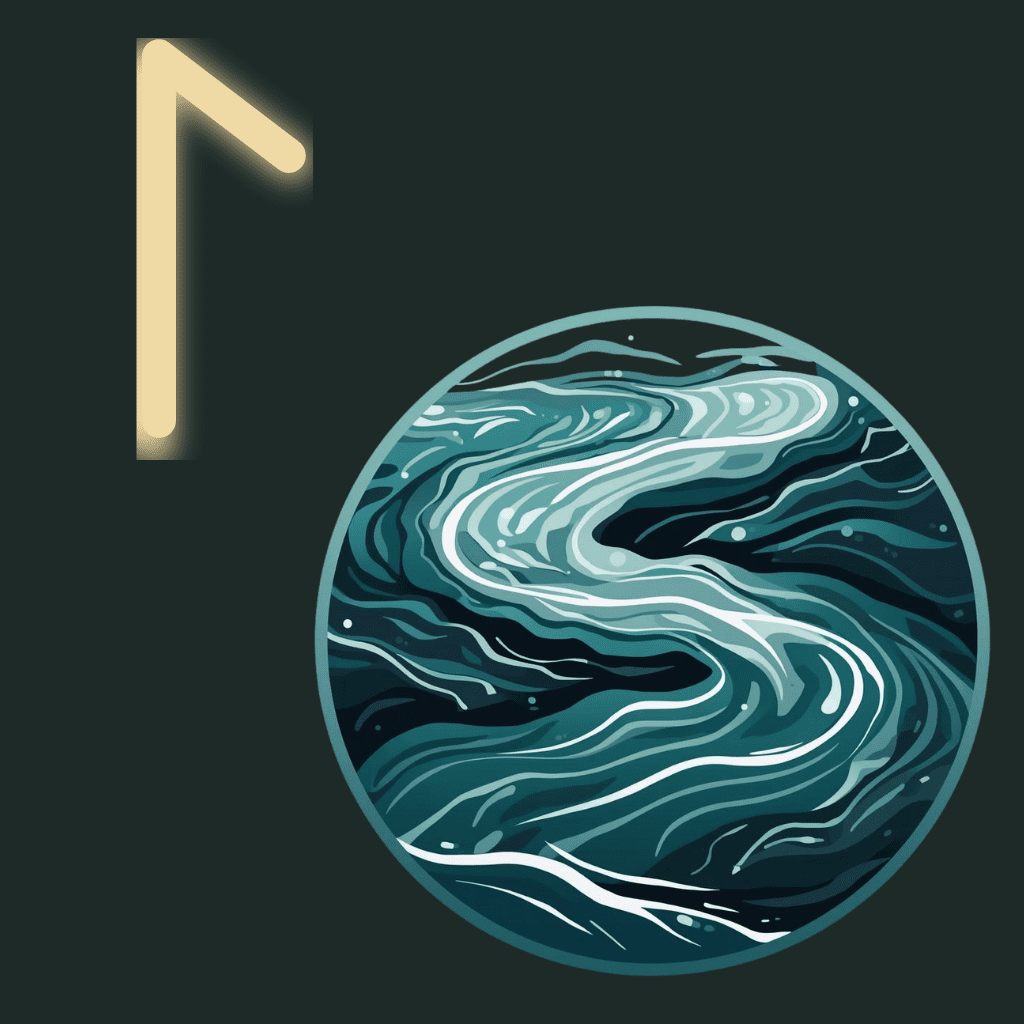
ᛚ LAGUZ — Flow
Laguz belongs to the Third Ætt and carries flow, intuition, and the movement of life beyond control.
Essence
Laguz is the rune of flow — life moving according to its own intelligence.
It represents surrender to currents that cannot be fully directed or contained. After human self-awareness (Mannaz), Laguz dissolves the illusion of mastery and returns experience to instinct, feeling, and embodied knowing.
At its core, Laguz teaches trust in movement that arises without certainty.
Element & Energy
Element: Water
Energy: Fluid / Unbound
Laguz carries the adaptive, responsive energy of water. It does not oppose obstacles; it moves around them, through them, or reshapes them over time. Its power lies in continuity rather than force.
This is intelligence without strategy.
Somatic / Energetic Layer
Laguz is felt through:
waves of emotion or intuition
softening of rigid control
bodily rhythms and breath
sensitivity to subtle signals
In the body, Laguz often appears as release — tension draining, breath deepening, awareness shifting from thought to sensation.
Nature & Mythology
Worlds: Vanaheim · Niflheim · Jötunheim (in part)
Natural symbols: rivers, tides, deep waters, rain
Laguz moves through fertile waters (Vanaheim), cold depths (Niflheim), and untamed currents (Jötunheim). It reflects water as both life-giving and overwhelming — a force that nourishes, erodes, and transforms without intent.
This rune governs movement that cannot be owned.
Laguz — Shadow / Caution (täpsustatud)
In its shadow, Laguz can manifest as:
emotional overwhelm that halts movement
loss of orientation within inner currents
complete stagnation masked as waiting
In its deepest shadow, Laguz becomes still water — a state where nothing moves, nothing clarifies, and no direction is visible.
This is not rest, but suspension: a paralysis caused by immersion without grounding.
The lesson of Laguz then is stark:
Movement must return, or water becomes a barrier rather than a passage.
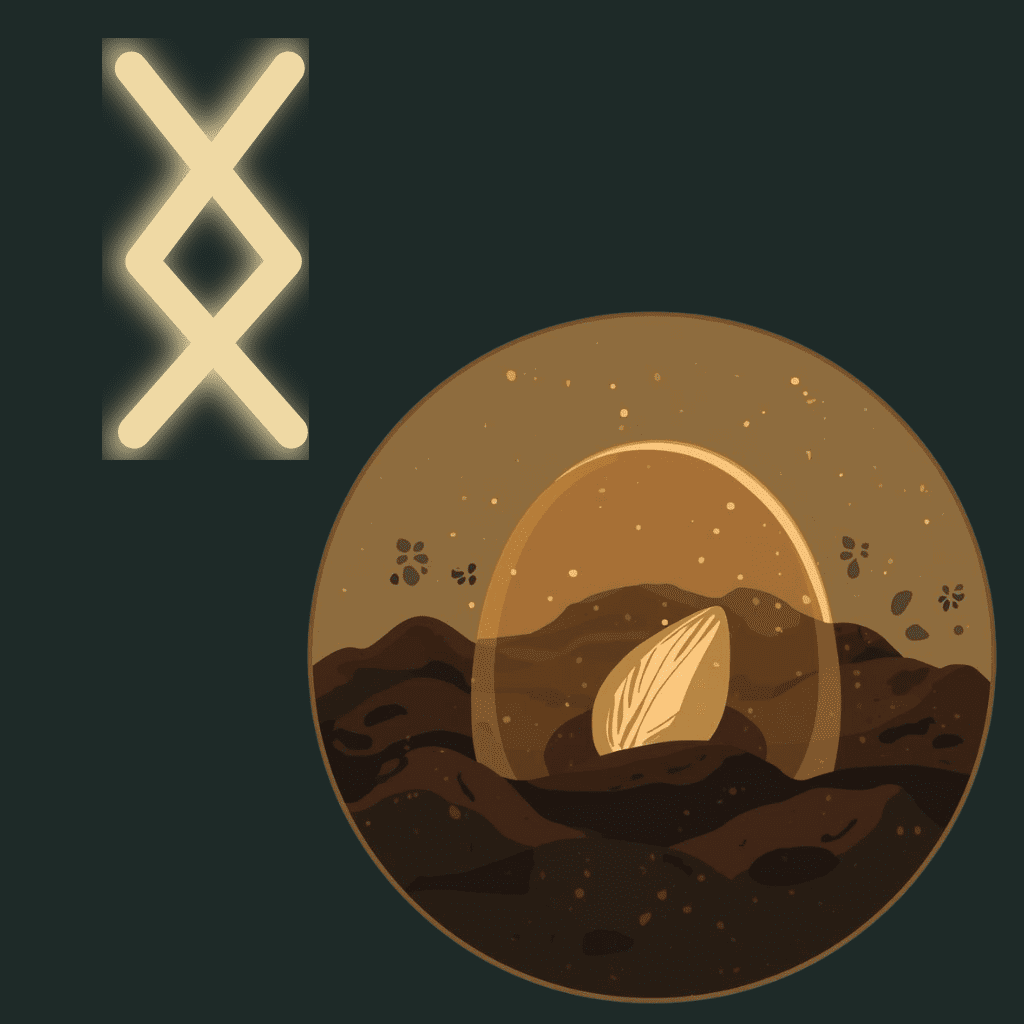
ᛜ INGWAZ — Gestation
Ingwaz belongs to the Third Ætt and gathers energy inward through gestation, containment, and inner completion.
Essence
Ingwaz is the rune of gestation and contained life force.
It represents a phase where movement turns inward, not as withdrawal, but as preparation. After the open flow of Laguz, Ingwaz gathers energy, allowing it to mature unseen.
At its core, Ingwaz teaches that not all growth is visible. Some phases require enclosure so that potential can fully ripen.
Element & Energy
Element: Earth (contained)
Energy: Inward / Concentrated
Ingwaz carries a dense, inward-drawing earth energy. It compresses rather than expands, holding life steady until the moment is right. This is not stagnation, but intentional containment.
This is power held, not expressed.
Somatic / Energetic Layer
Ingwaz is felt through:
heaviness that is calm, not restrictive
inward focus and withdrawal from outer demands
a sense of fullness without release
bodily awareness centered in the core
In the body, Ingwaz often manifests as grounded stillness. It supports deep rest, regeneration, and the quiet integration of experience.
Nature & Mythology
World: Vanaheim
Natural symbols: seed, enclosed spaces, fertile soil
Ingwaz belongs to Vanaheim, the realm of life force, fertility, and cyclical renewal. It reflects growth that happens beneath the surface — where life is protected until it is ready to emerge.
This rune governs inner completion.
Shadow / Caution
In its shadow, Ingwaz can manifest as:
containment turning into suppression
fear of release or exposure
over-identification with waiting
stagnation through refusal to open
When gathering becomes hoarding, Ingwaz loses balance. Its lesson is timing:
Containment must eventually give way to expression.
>>Continue to Othala — where what has gathered begins to take root
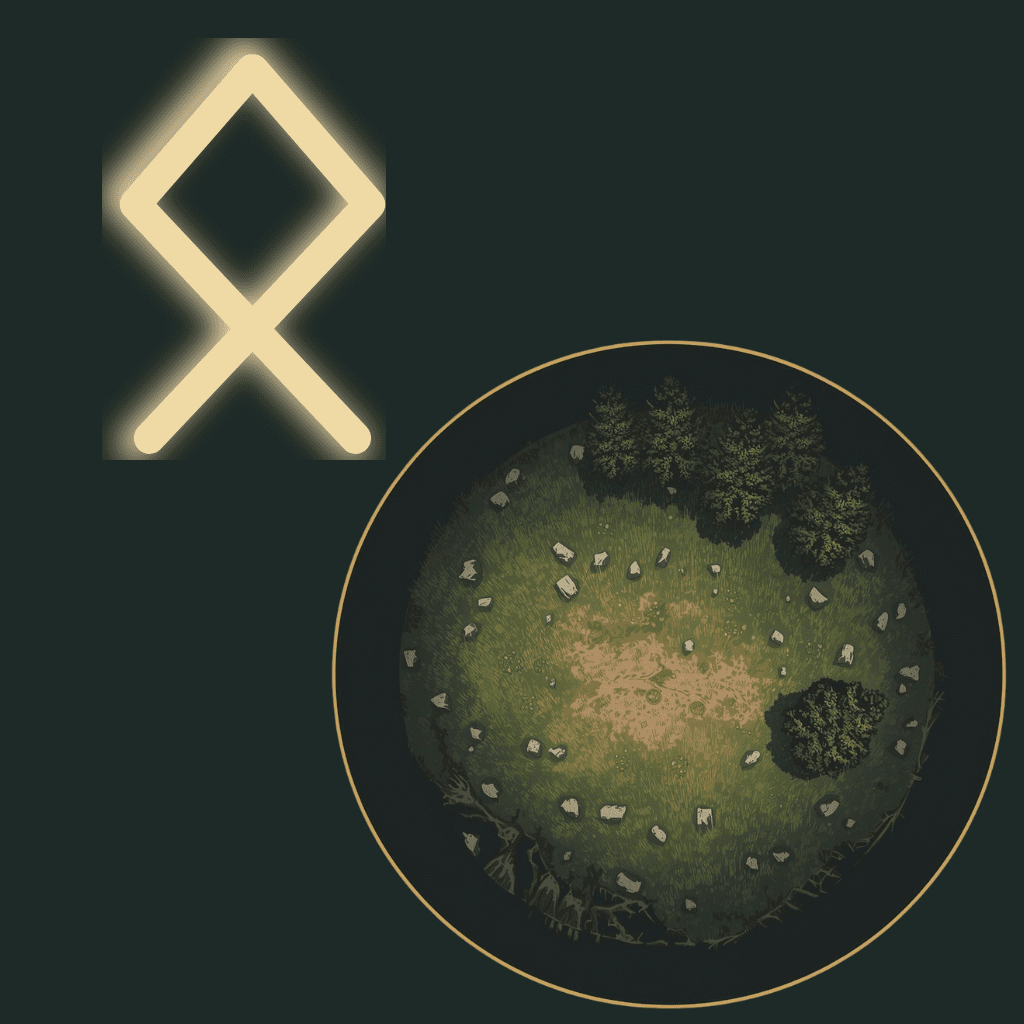
ᛟ OTHALA — Belonging
Othala belongs to the Third Ætt and defines belonging through inheritance, home, and ancestral continuity.
Essence
Othala is the rune of belonging — not as ownership, but as rooted presence.
It represents the moment when what has matured inwardly (Ingwaz) finds its place in the world. Othala asks not what do I possess, but where do I belong.
At its core, Othala teaches that true belonging arises through continuity: lineage, land, memory, and responsibility carried forward.
Element & Energy
Element: Earth (established)
Energy: Stable / Grounded
Othala carries a settled earth energy — firm, enduring, and protective. It does not seek expansion, but stability. This is grounding that holds without confining.
This is presence anchored in place.
Somatic / Energetic Layer
Othala is felt through:
steadiness in the lower body
a sense of safety rooted in familiarity
connection to ancestry or place
calm confidence that does not seek validation
In the body, Othala brings a feeling of being “at home” — not necessarily comfortable, but solid and reliable.
Nature & Mythology
World: Asgard
Natural symbols: enclosure, homestead, boundary stones
Othala is associated with Asgard as a realm of order, inheritance, and continuity. It reflects structures that endure across generations — not through dominance, but through shared values and upheld boundaries.
This rune governs what is carried forward.
Shadow / Caution
In its shadow, Othala can manifest as:
-
exclusion disguised as belonging
-
rigid attachment to tradition
-
fear of change justified by heritage
-
possession mistaken for identity
When roots harden into walls, Othala isolates. Its lesson is balance:
Belonging must remain alive, not defended.
>>Continue to Dagaz — where rootedness opens into transformation
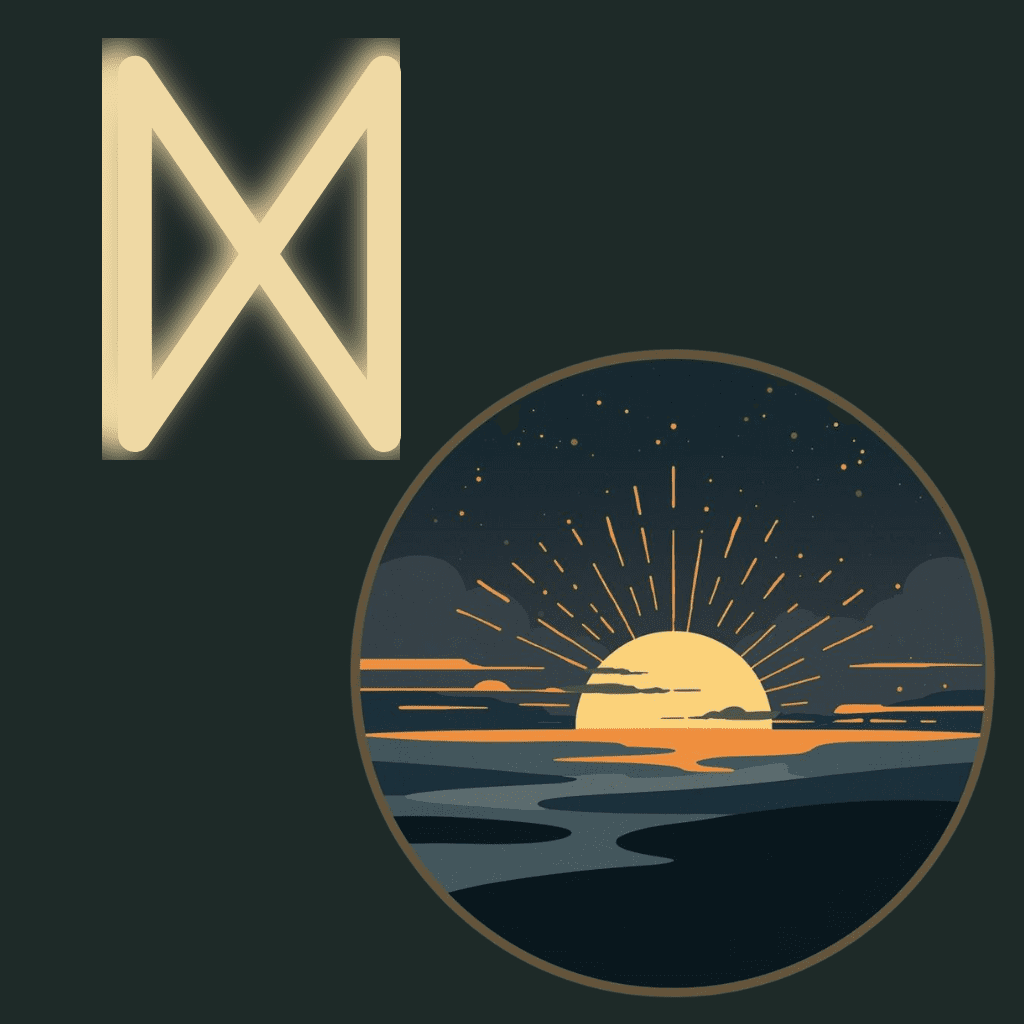
ᛞ DAGAZ — Breakthrough
Dagaz belongs to the Third Ætt and completes the runic cycle through breakthrough, integration, and irreversible change.
Essence
Dagaz is the rune of breakthrough — the turning point where night becomes day.
It represents a sudden but prepared shift in awareness, where accumulated experience reorganizes into clarity. Dagaz does not arrive from effort alone; it emerges when conditions align and perception changes.
At its core, Dagaz teaches that transformation is not gradual. It is a threshold crossed in an instant, even if prepared over a long time
Element & Energy
Element: Light (transformative)
Energy: Expansive / Reorienting
Dagaz carries an expansive, illuminating energy. It reorganizes rather than adds — revealing what was already present but unseen. This is not explosive force, but a decisive shift in orientation.
Dagaz changes how reality is perceived.
Somatic / Energetic Layer
Dagaz is felt through:
sudden clarity or insight
release of long-held tension
a sense of opening or relief
renewed vitality without agitation
In the body, Dagaz can feel like a deep breath after pressure — a reorientation rather than a rush.
Nature & Mythology
Worlds: Muspelheim · Asgard
Natural symbols: dawn, horizon line, crossing of light
Dagaz stands at the meeting point of fire and order — Muspelheim’s transformative light and Asgard’s conscious structure. It reflects dawn not as comfort, but as revelation: what is now visible cannot be unseen.
This rune governs irreversible change.
Shadow / Caution
In its shadow, Dagaz can manifest as:
-
chasing constant transformation
-
mistaking novelty for awakening
-
instability through repeated rupture
-
refusal to integrate insight
When breakthrough is sought without grounding, Dagaz fragments. Its lesson is integration:
What is revealed must be lived.
>>Return to Fehu — where the cycle begins again, carrying what has been learned
