The Golden Age does not end suddenly. It slowly grows heavier, like the air before a storm. Gold, once so abundant that it is shaped into toys, begins to feel different. Someone looks at it and, for the first time, feels the urge to keep it.
This is how Kullveig enters the world. Her name means gold-lust, yet what she truly brings is a new thought — one that has never existed before. The idea that beauty can become value. That value can become power. And that power can be something worth pushing others aside for. For this, Kullveig is condemned to death.
Burning Kullveig does not destroy her. She is burned three times, and each time she returns. A thought cannot be burned. Once it is born, it continues to live. From each burning, a Norn is born — first Urd, then Verdandi, and finally Skuld.
This is where the world is tested.
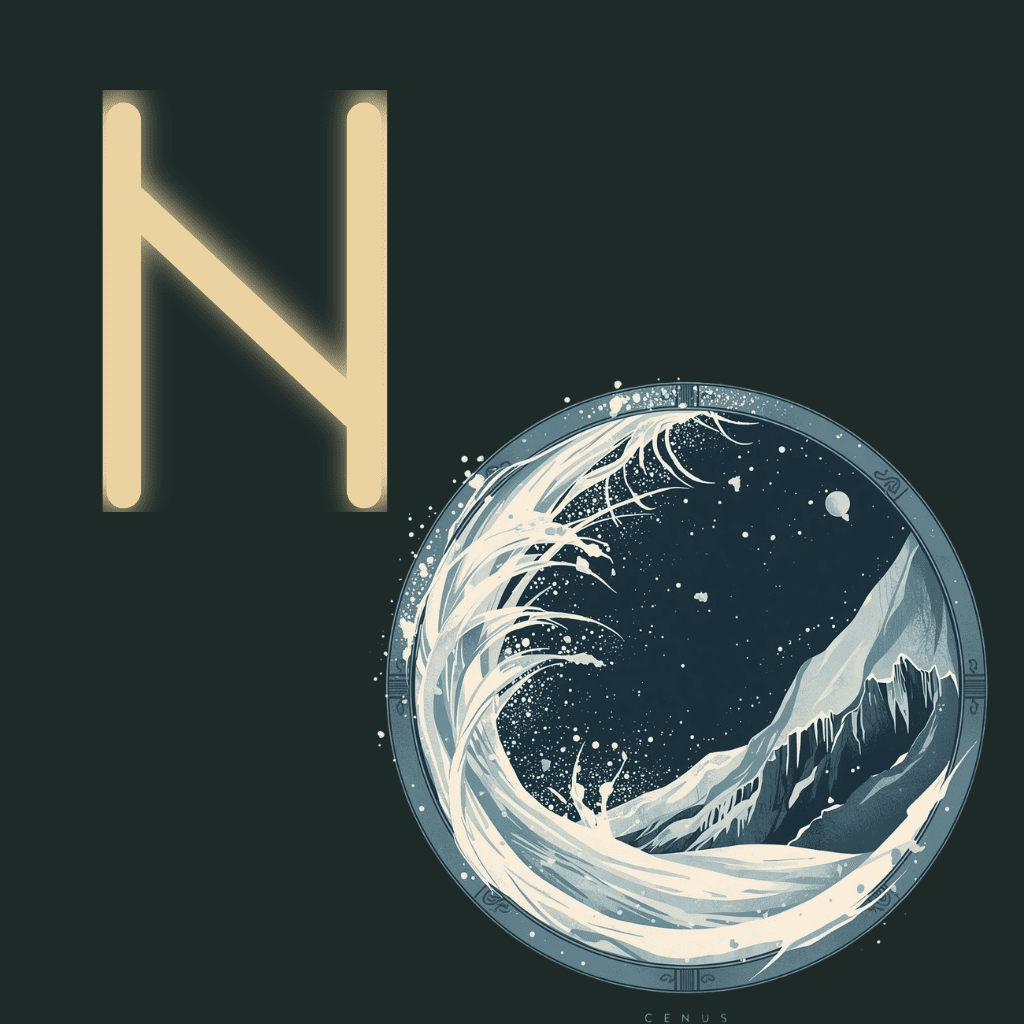
Hagalaz belongs to Urd, the Norn of the past, to that which has already been. It is the force that breaks the old form, not out of revenge, but so that what remains unresolved can finally be seen. Hagalaz helps make peace with what has been. It shakes loose what has frozen into the past and says: this has happened — now look at it. The world does not break from evil, but because it is ready to change.
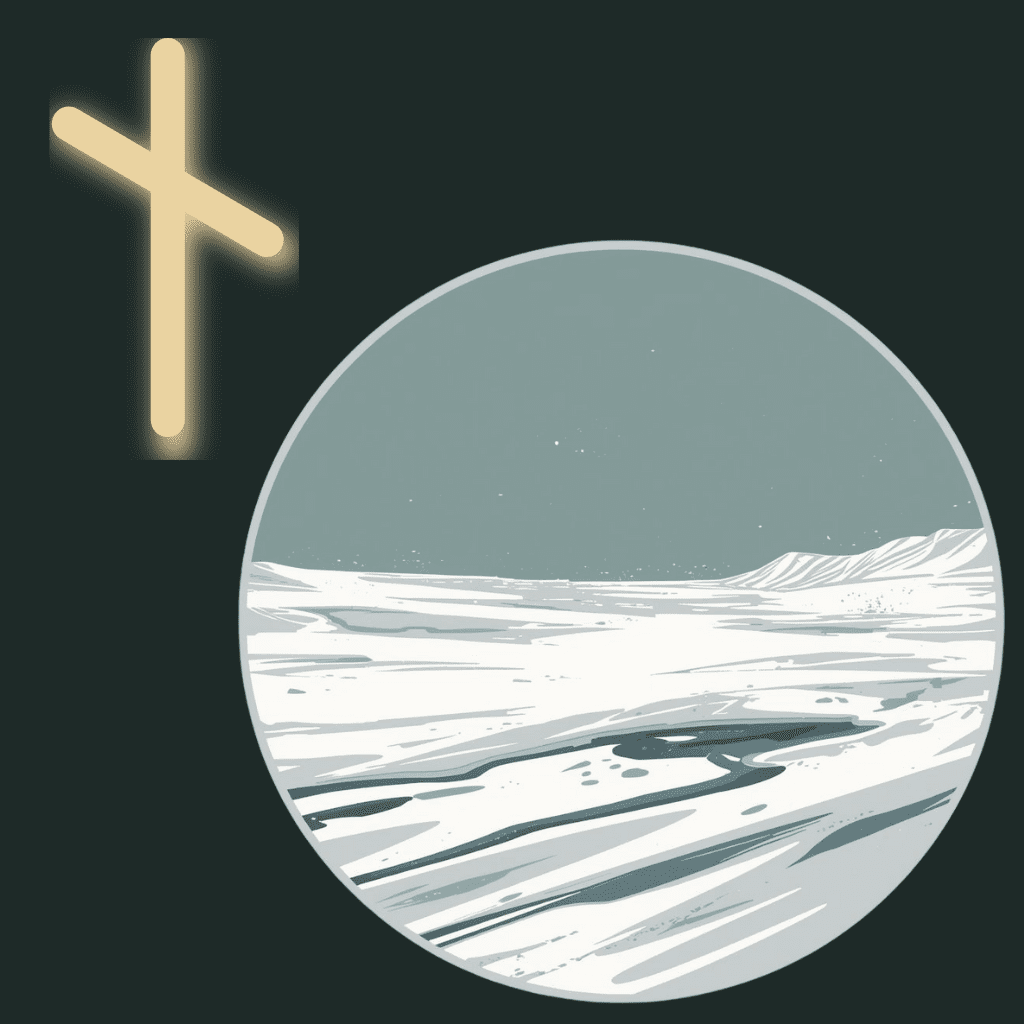
From this moment on, the world is no longer light. Something is missing, and something is too much. This is Nauthiz, the rune of necessity and inevitability, bound to Skuld, the Norn of the future. Skuld is the one who walks after souls and reminds them: that which has begun must also end. Nauthiz offers no comfort, only truth. Nothing can simply be taken away or fully satisfied — it must be lived through.
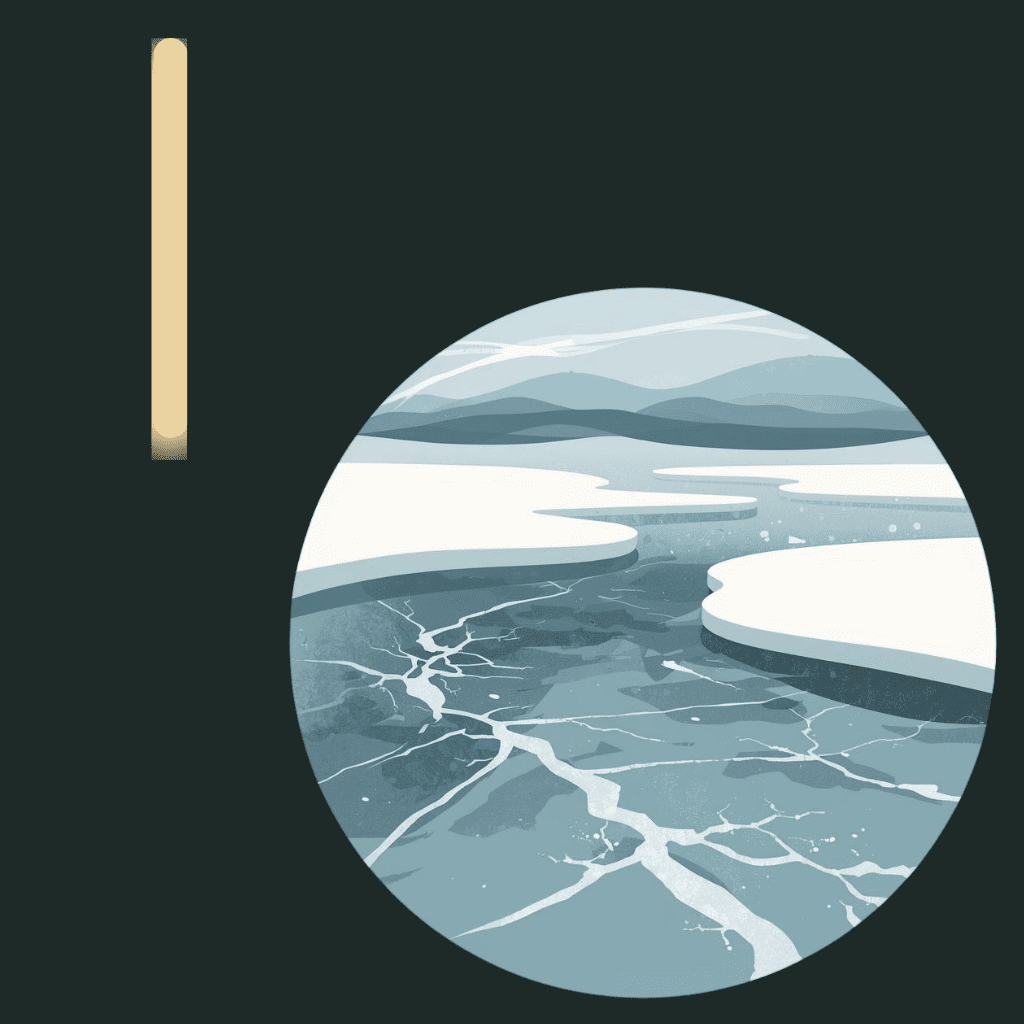
Some things come to a halt. They freeze in place, as if waiting for something that is not yet ready to arrive. This is Isa — the frozen present moment. Stillness. Presence held under tension.
With the Norns, time becomes something that is felt in the body. Time in which a child becomes young, the young become adult, and the adult becomes old. Time in which something is born, unfolds, ripens, and fades. From this moment on, everything that is born is also destined to die. Time gains measure, and life gains a boundary.
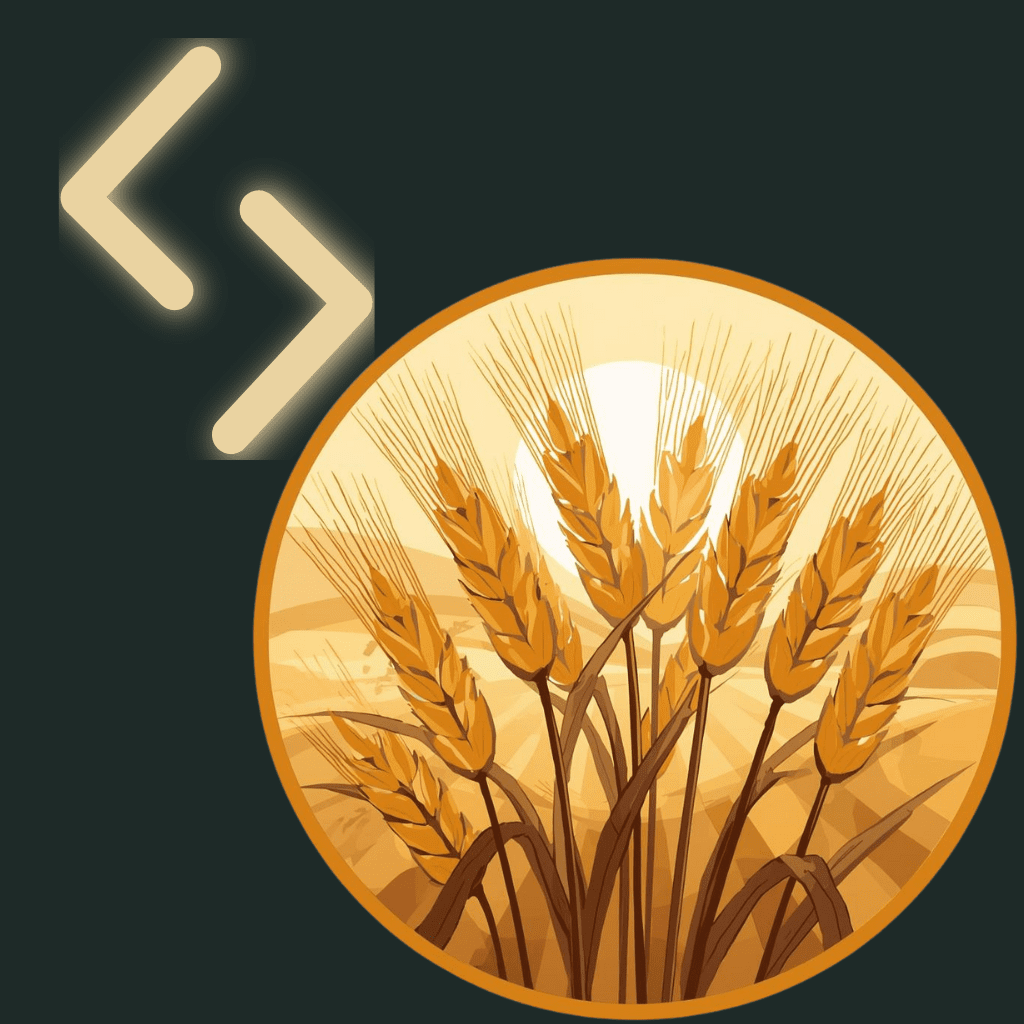
The world moves forward in a circle. One year follows another. Sowing follows harvest, and harvest gives way to the empty field. This is Jera — the cycle, repetition, slow and inevitable movement that allows life to continue and humanity to grow through return rather than escape.
Odin looks upon the world and senses that there must be more. Something that reaches beyond the circle. Something that connects life and death, past and future. He chooses to seek it at his own cost.
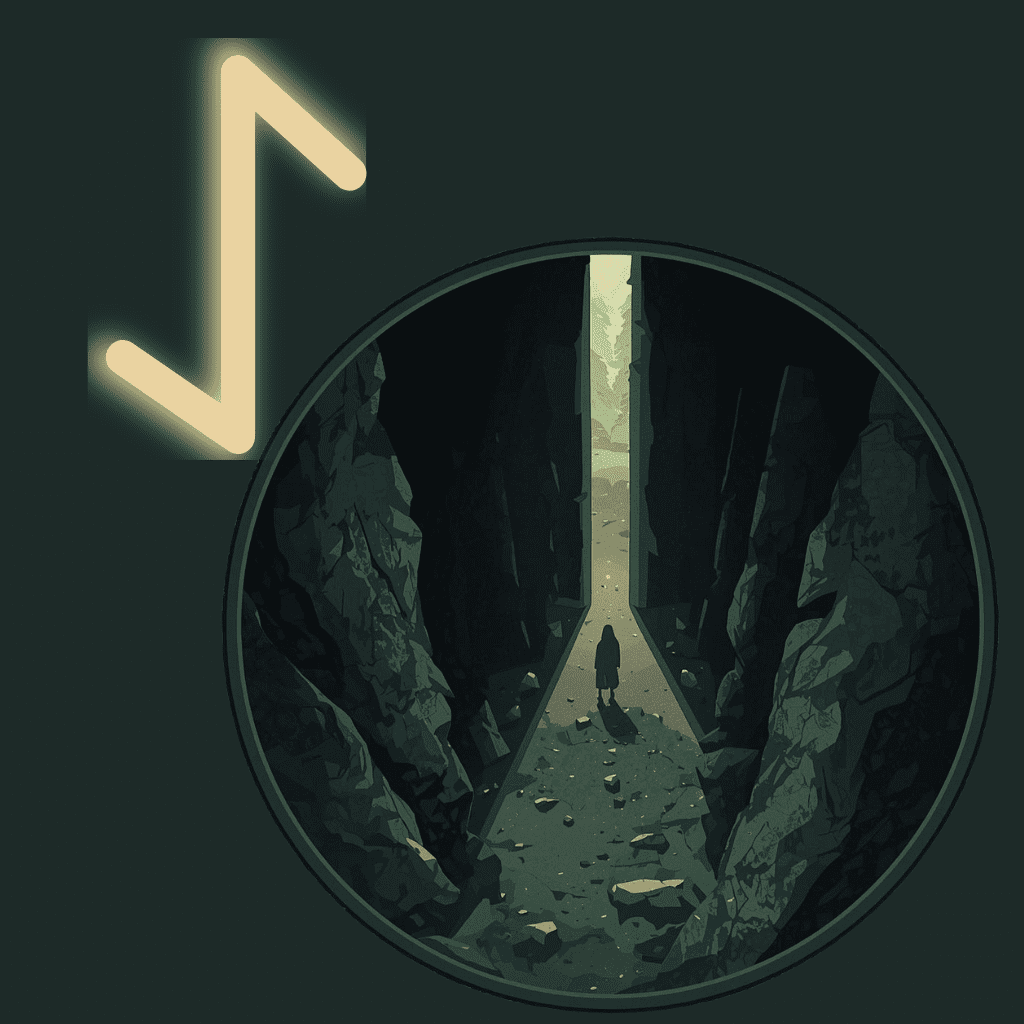
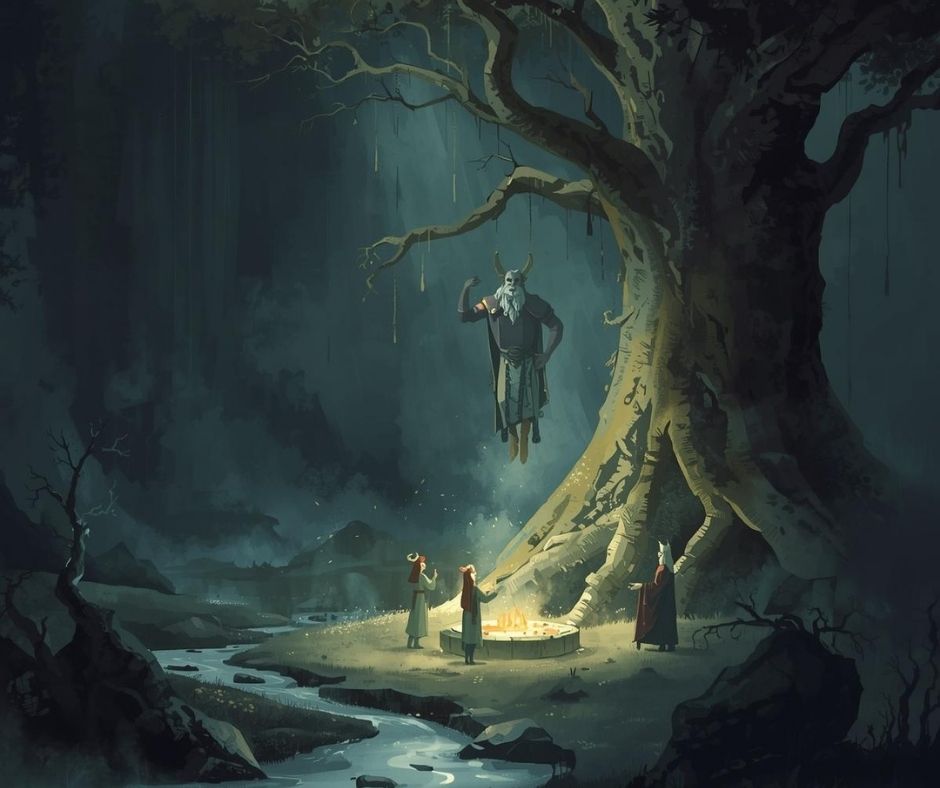
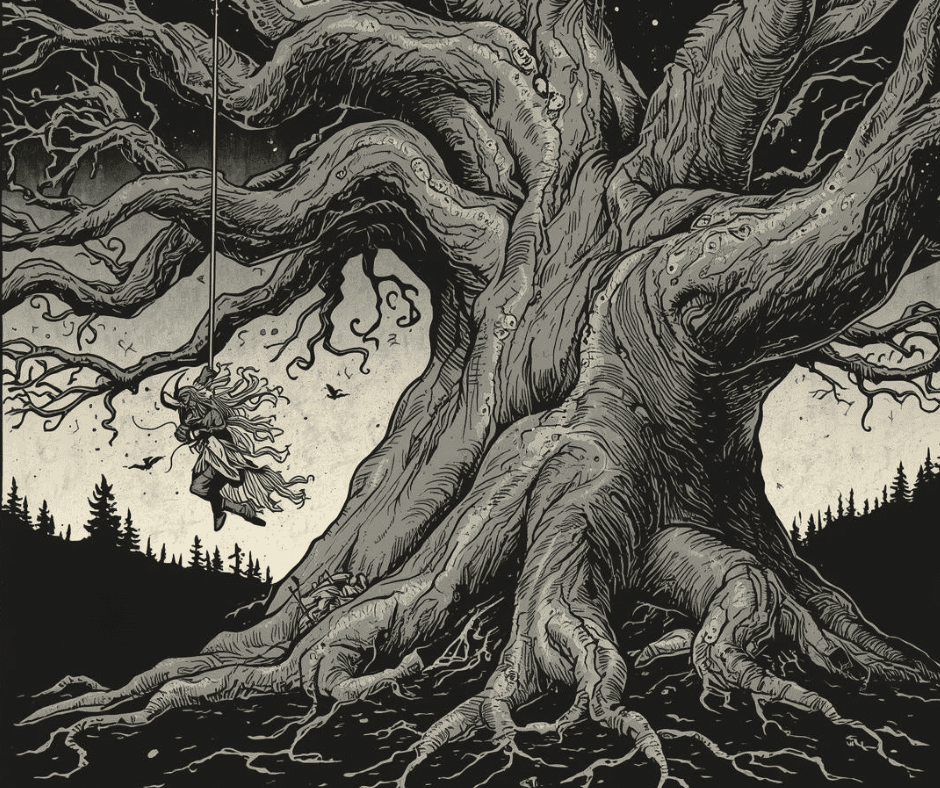
Odin hangs himself upon the World Tree and remains there, between life and death. This is Eihwaz — the world pillar, the axis that holds all realms together. At the threshold, Odin perceives the runes — not as symbols, but as living energy. He understands that the world does not endure through force, but through meaning.
Runic knowledge demands sacrifice. Odin offers his eye into Mimir’s well, marked by Perthro — mystery, fate, a well whose bottom cannot be seen. Here lies the understanding that not everything can be chosen. Some things happen before we even ask why. Odin sees past, present, and future, and understands that knowledge alone does not grant power.
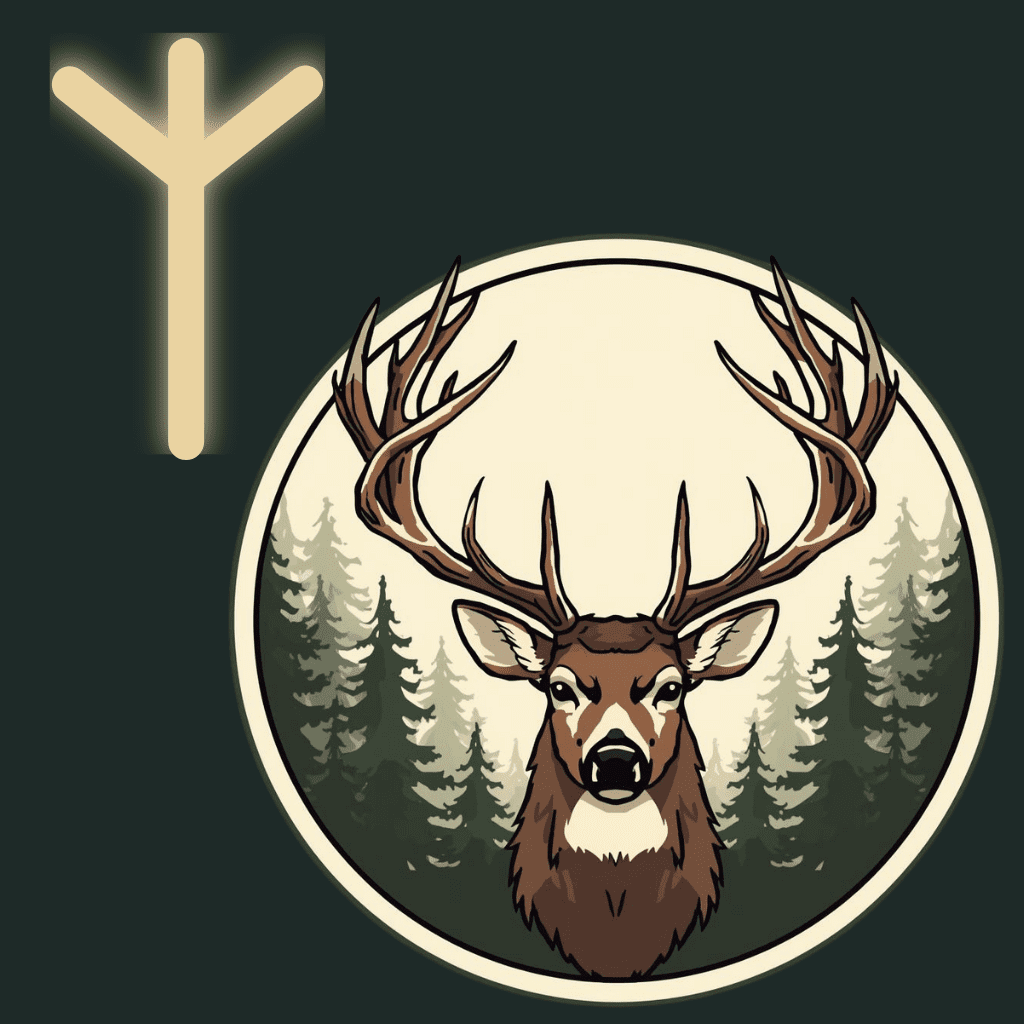
Odin descends into the realm of the dead and calls forth a seeress named Heid. From this union, the Valkyries are born. They move above battlefields and choose those warriors who are destined for Valhalla. This is Algiz — protection that does not cling to life, but guides it where it belongs.
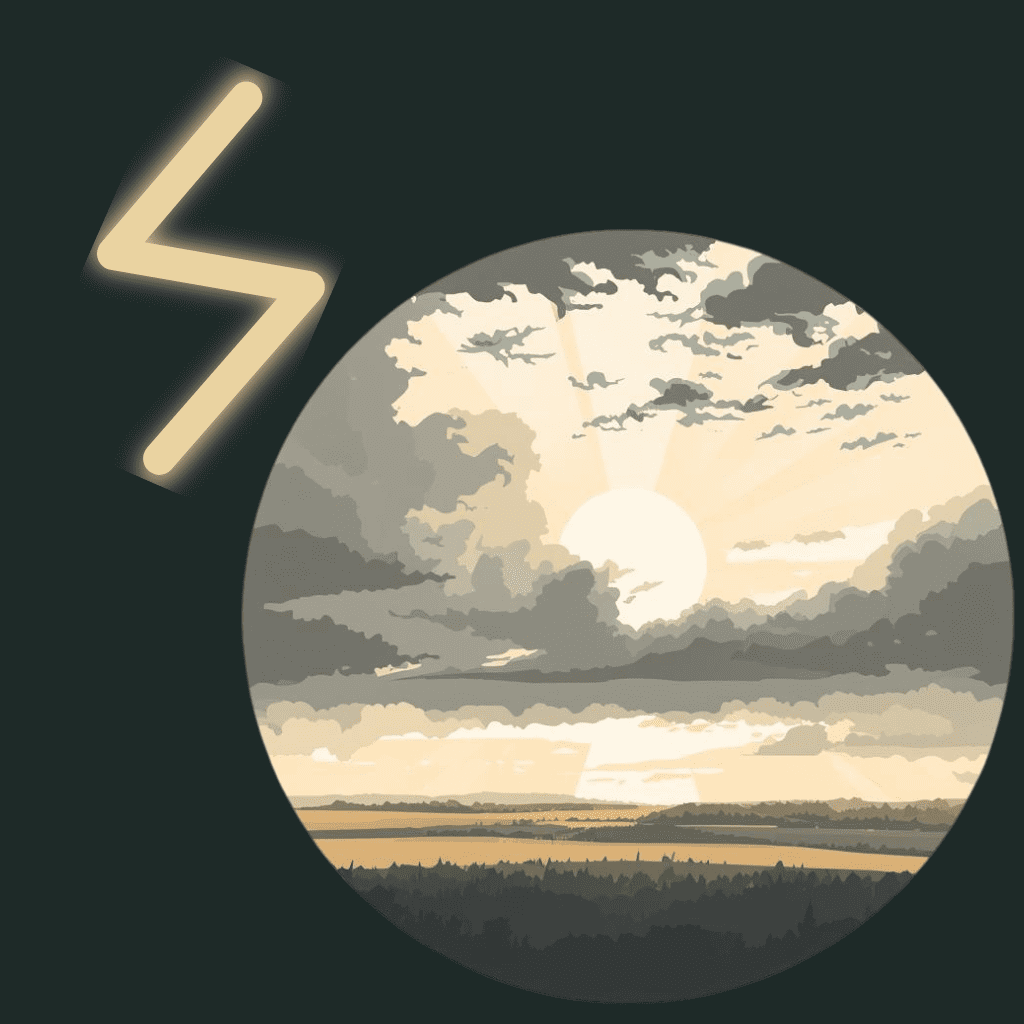
Awareness rises again. The light is no longer the gentle sun of the Golden Age. It is conscious light — a light that knows darkness and does not fear it. This is Sowilo — the sun that guides, not the sun that plays.
Odin becomes a pathfinder, the bearer of the people’s soul, the one who holds direction even when the road is hard.
Ahead lies a time when the world must break one final time, so that something new can be born.
But that… is the story of the Third Ætt.
If you feel called to walk deeper with the runes, you are welcome to join my newsletter.
As a first step, you can receive the Rune Compass — a simple guide to the Elder Futhark and its three aettir, created to help you orient yourself on your rune path.